All about FIDDLE ORCHESTRAS!
The Fiddler’s POV project was made possible by the New York State Council on the arts with the support of the Office of the Governor and the New York State Legislature. [2026]
Hi friends!
Let’s talk about fiddle orchestras. Below are my thoughts, tips and resources!
Happy music making,
~Gretchen
Debut of The North Country Fiddle Orchestra. (2022)
I. What’s a Fiddle Orchestra?
II. Finding a Fiddle Orchestra
III. Starting a Fiddle Orchestra
IV. Choosing Repertoire & Arrangements
V. Rehearsal Strategies
VI. Arrangements & Resources
I. What’S A FIDDLE ORCHESTRA?
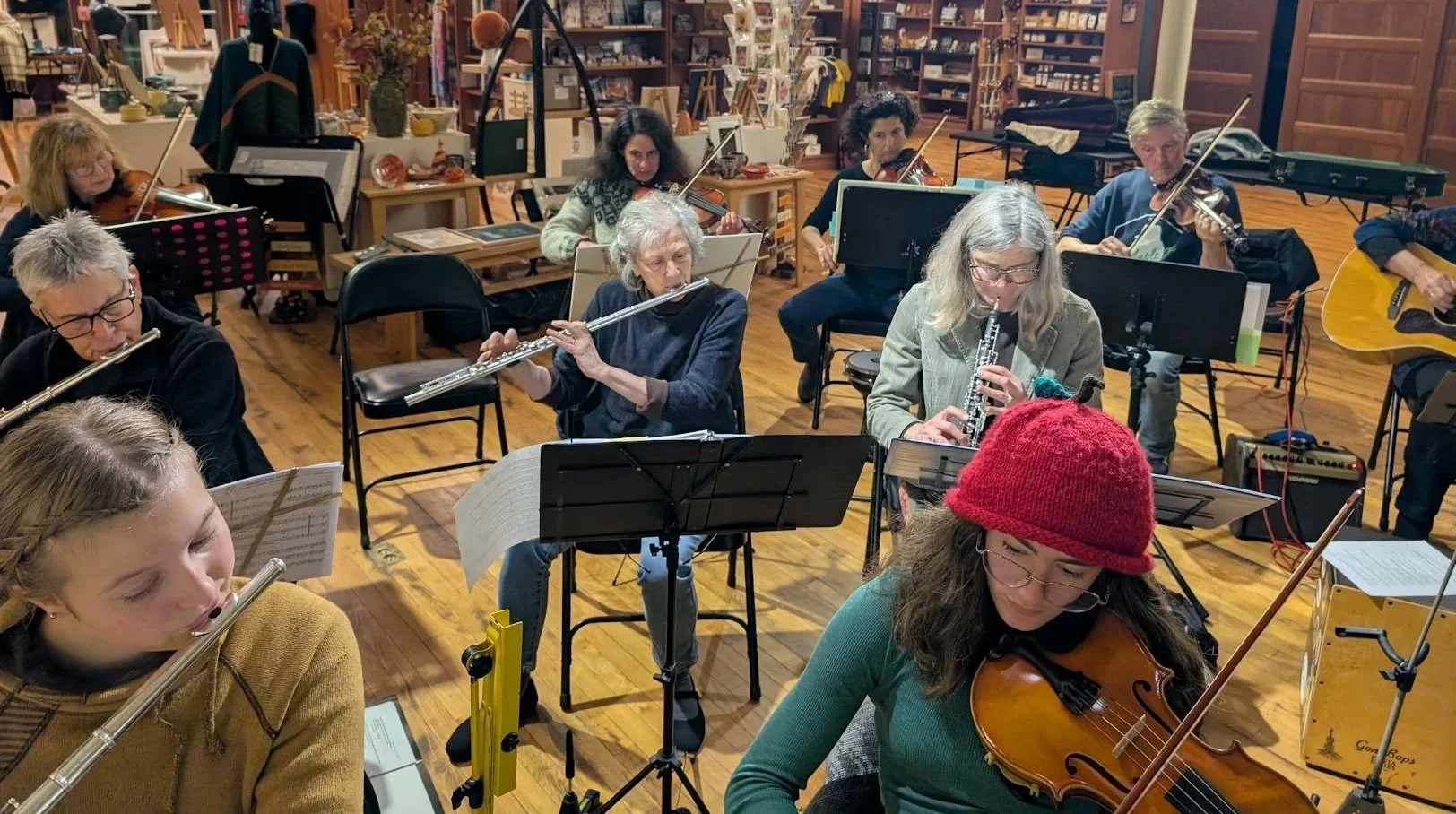
NCFO rehearsal (Koehler photo)
Fiddle orchestras come in many forms, but at their core they’re a group of people playing “fiddle” music together. In addition to a lot of fiddle players, many groups encourage a variety of acoustic instruments to join. Their goal is not typically to teach how to play an instrument, but rather build musicians’ ensemble skills, foster a musical community, and share the joy of making music together. Many welcome musicians of all ages and skill levels, though some cater to younger musicians while a few require an audition. Rehearsals may be frequent and performance-focused, casual monthly gatherings, or a mix of online and in-person sessions.
The Vermont Fiddle Orchestra - my inspiration:
I was introduced to my first fiddle orchestra in 2019 when my friend David Kaynor invited me to be a guest soloist with The Vermont Fiddle Orchestra. In Montpelier I met a delightful mix of adult learners and young musicians from novices to pros, playing a variety of instruments.
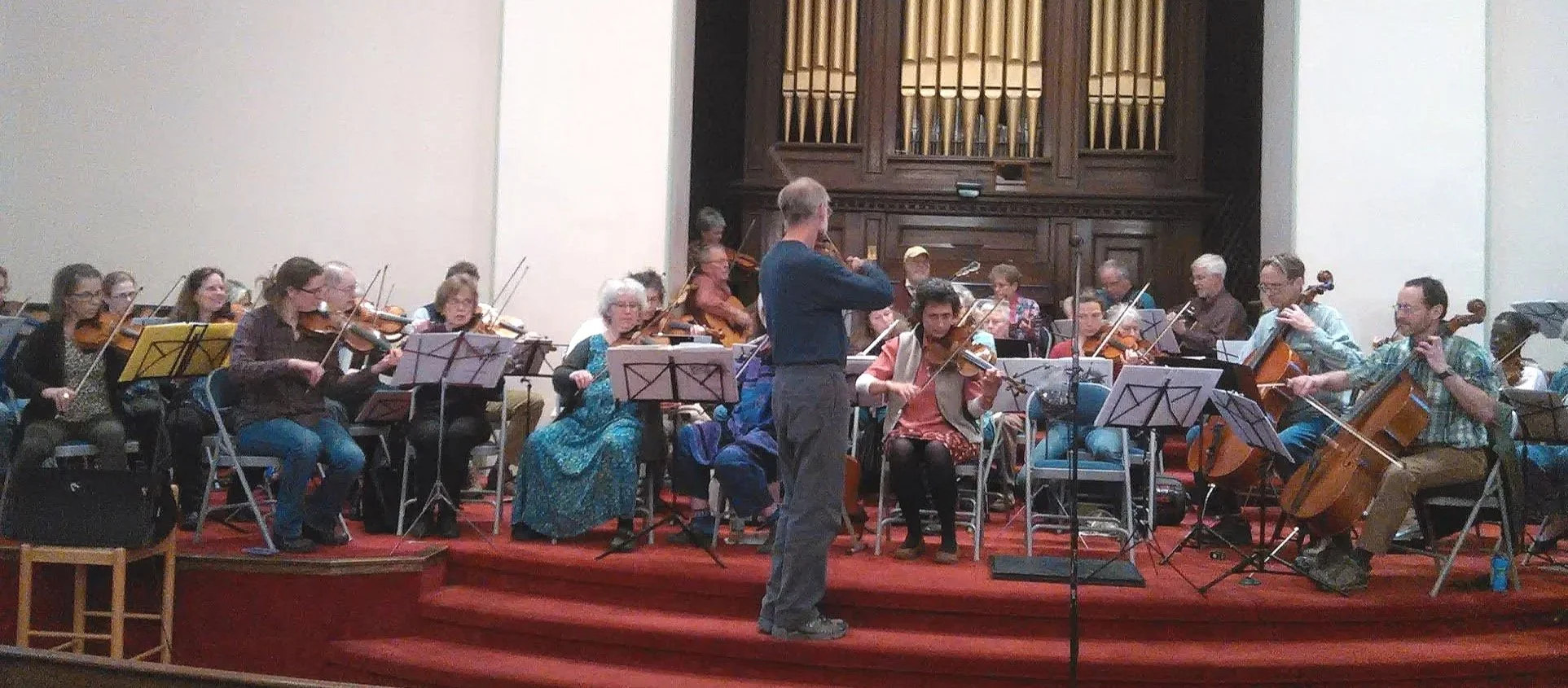
David Kaynor & The Vermont Fiddle Orchestra rehearsal (2019) [Koehler photo]
At the time, I was looking to broaden the musical experience for students The Madstop Fiddlers. Offering my 40 players the opportunity to play with guitars, mandolins, flutes, banjos, double basses and MORE sounded wonderful! After sharing the idea with TAUNY [Traditional Arts in Upstate New York]. and securing grant funding and community support, we were ready to begin… then the pandemic hit. Fortunately, we were able to delay the project, and in 2022 the North Country Fiddle Orchestra finally launched.
II. FINDING A FIDDLE ORCHESTRA
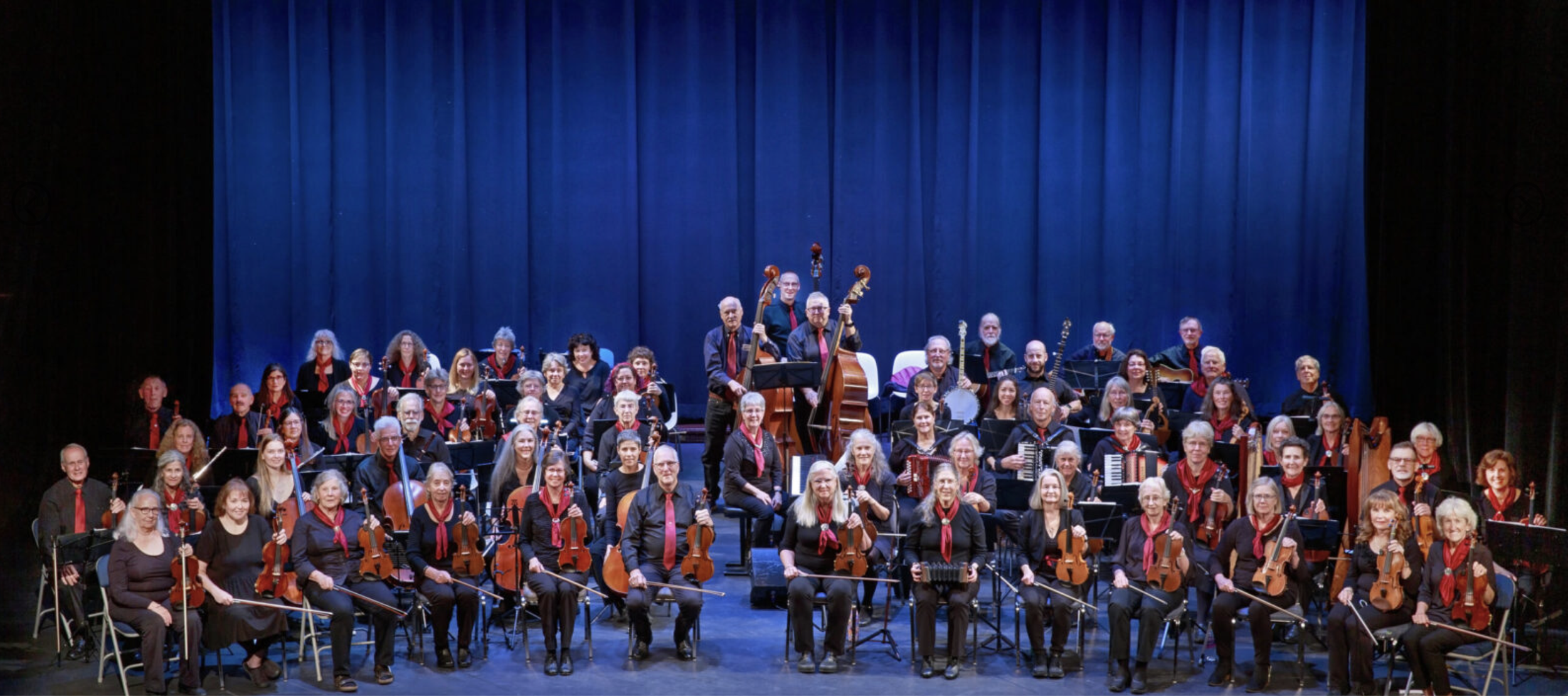
FIDDLE-ICIOUS “Maine’s Largest Fiddle Orchestra” • Based in Falmouth, Maine.
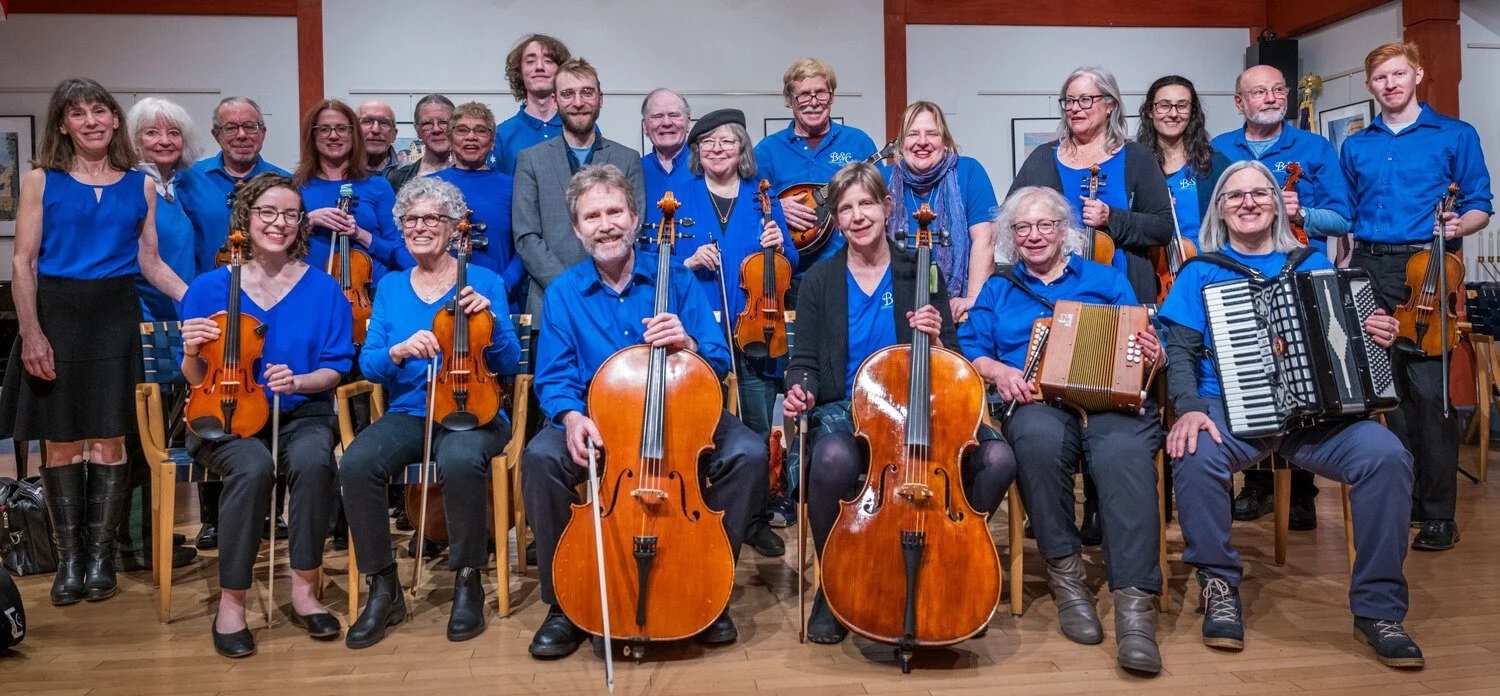
BOSTON SCOTTISH FIDDLE ORCHESTRA • Based in Boston, Massachusetts.
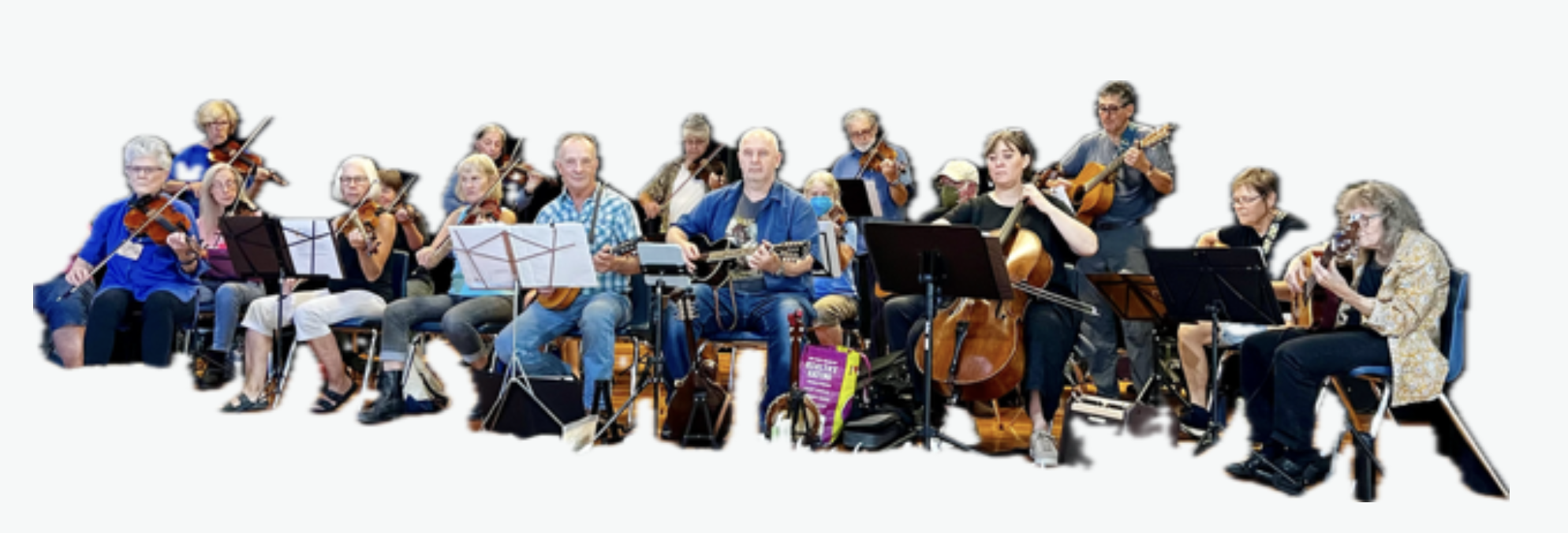
FIDDLE ORCHESTRA OF WESTERN MASS • Based in Northampton, Massachusetts.
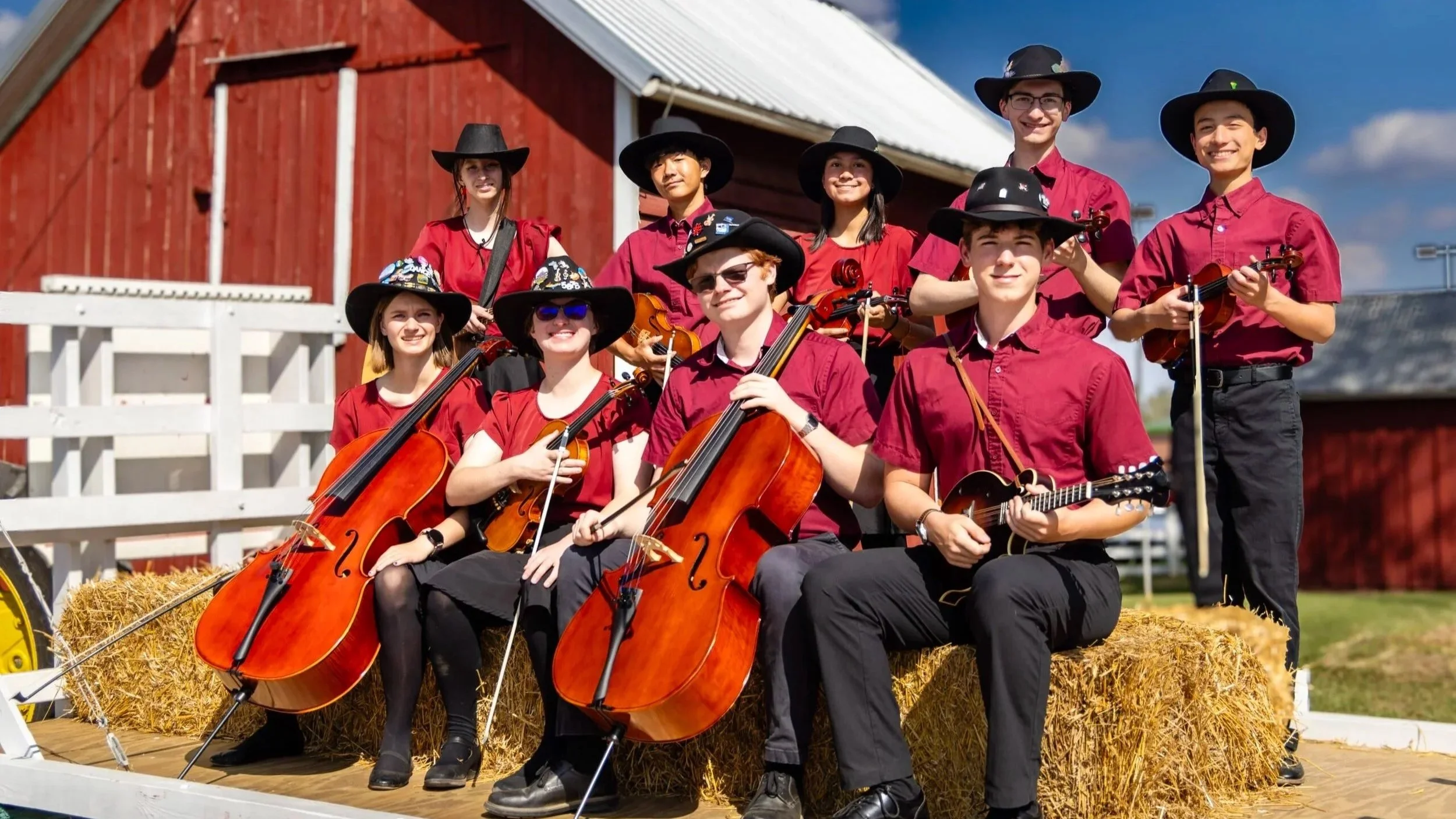
SALINE FIDDLERS PHILHARMONIC • Based in Saline, Michigan.
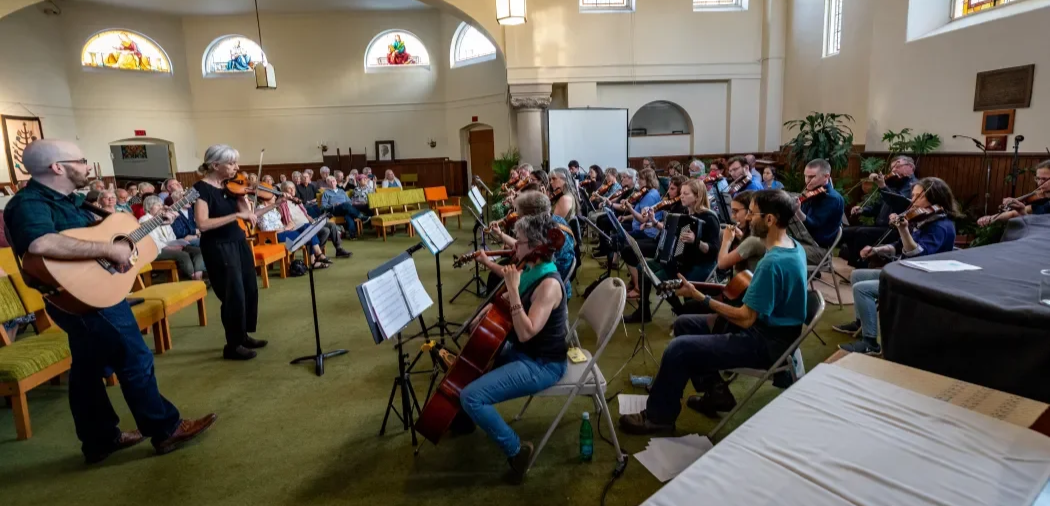
FINGER LAKES FIDDLE ORCHESTRA • Based in Ithaca, New York.
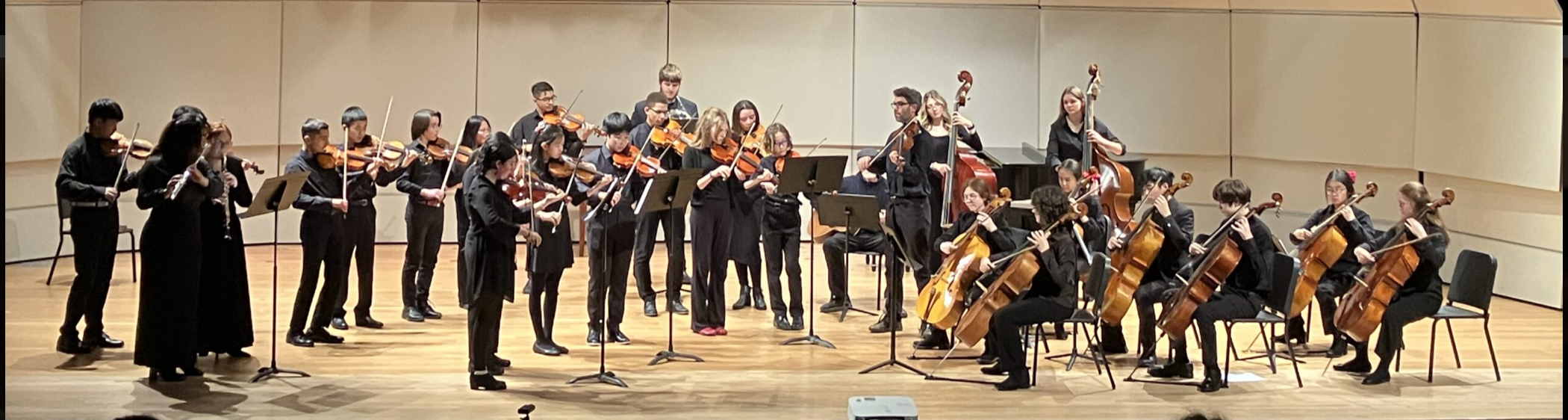
EMPIRE STATE YOUTH ORCHESTRA/ FIDDLE ENSEMBLE • Based in Schenectady, New York.
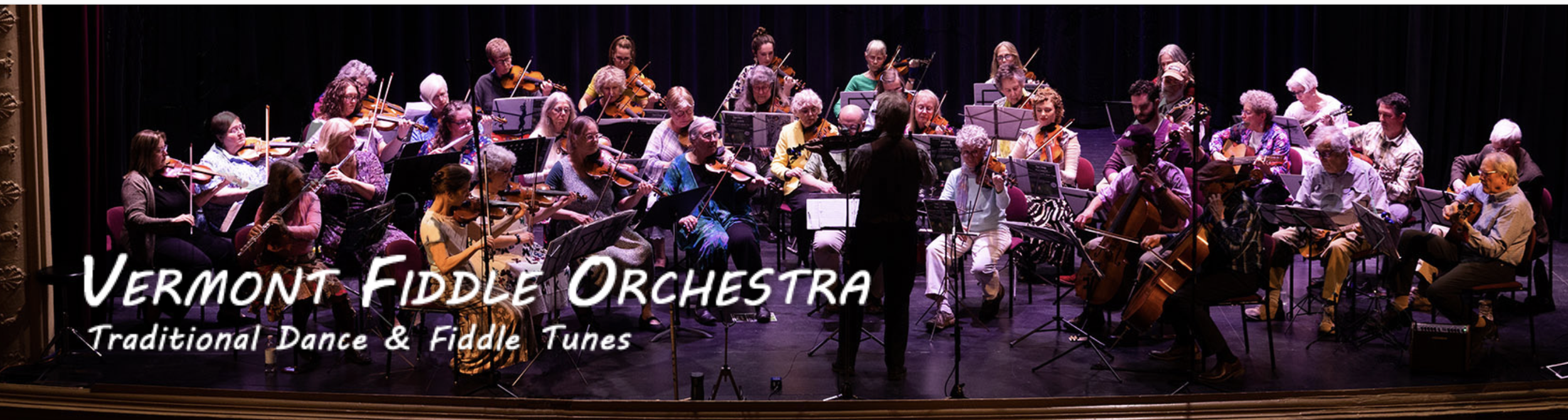
VERMONT FIDDLE ORCHESTRA • Based in Montpelier, Vermont.
FOREST CITY FOLK ORCHESTRA • Based in London, Ontario, Canada.
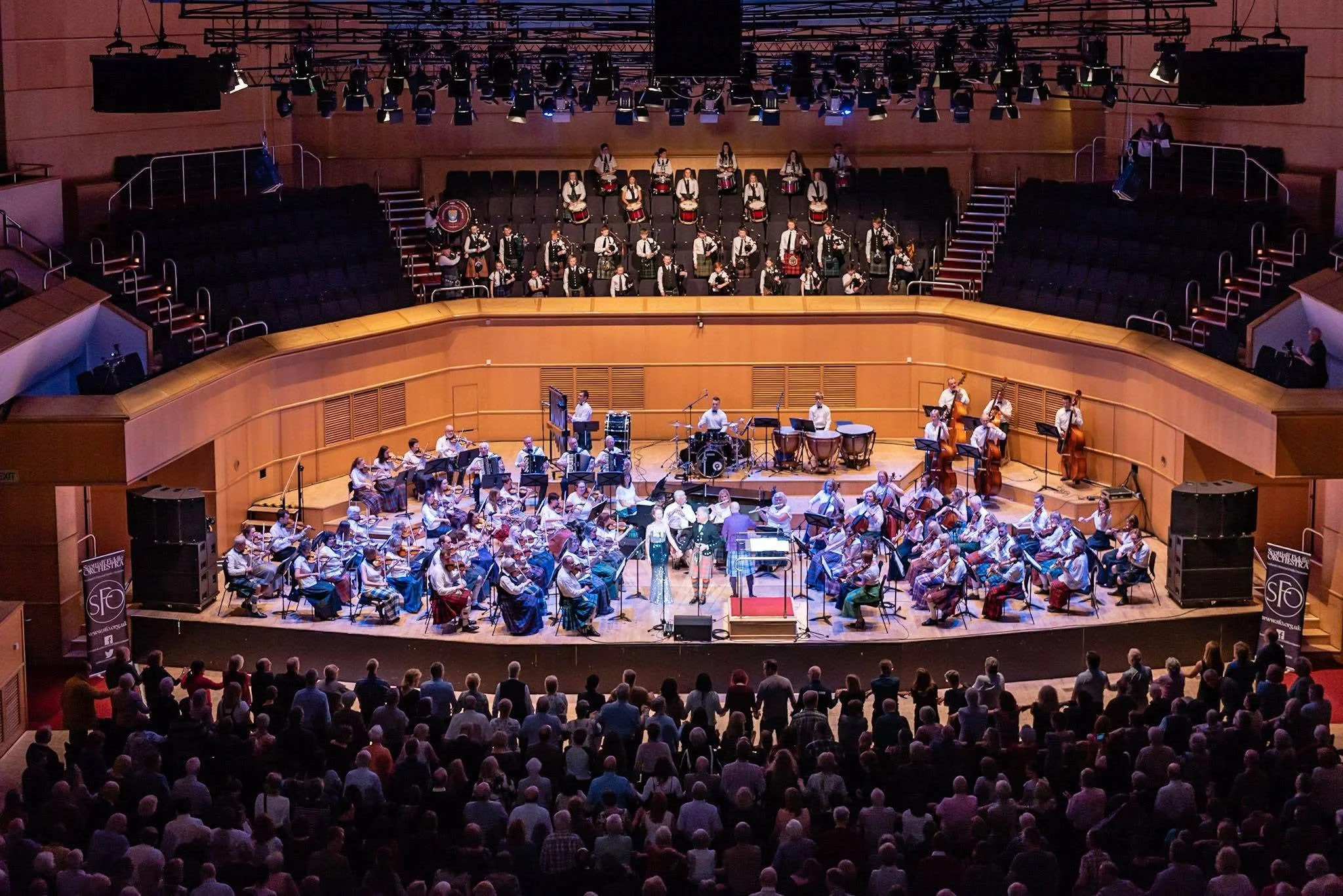
THE SCOTTISH FIDDLE ORCHESTRA • Based in Scotland.
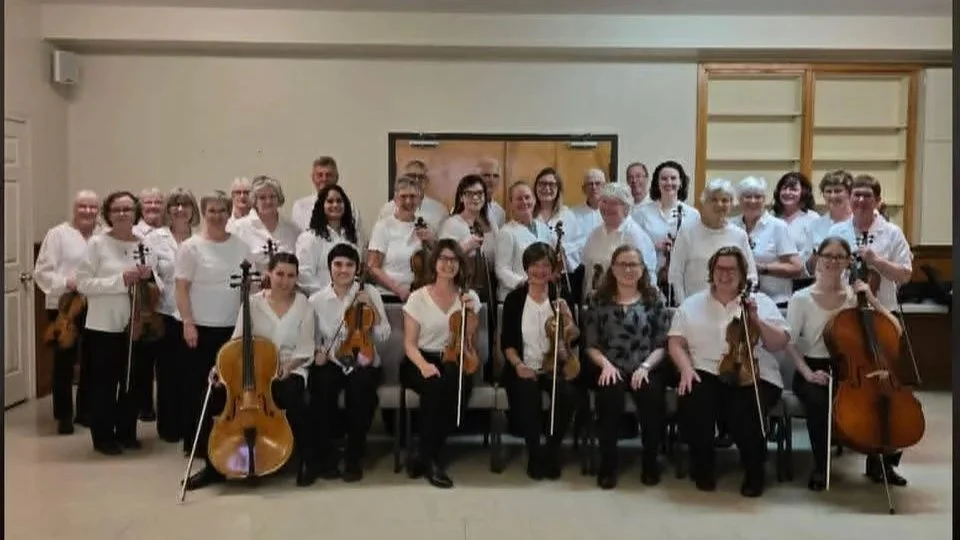
KAREN REED FIDDLE ORCHESTRA • Based in Kitchener, Ontario, Canada.
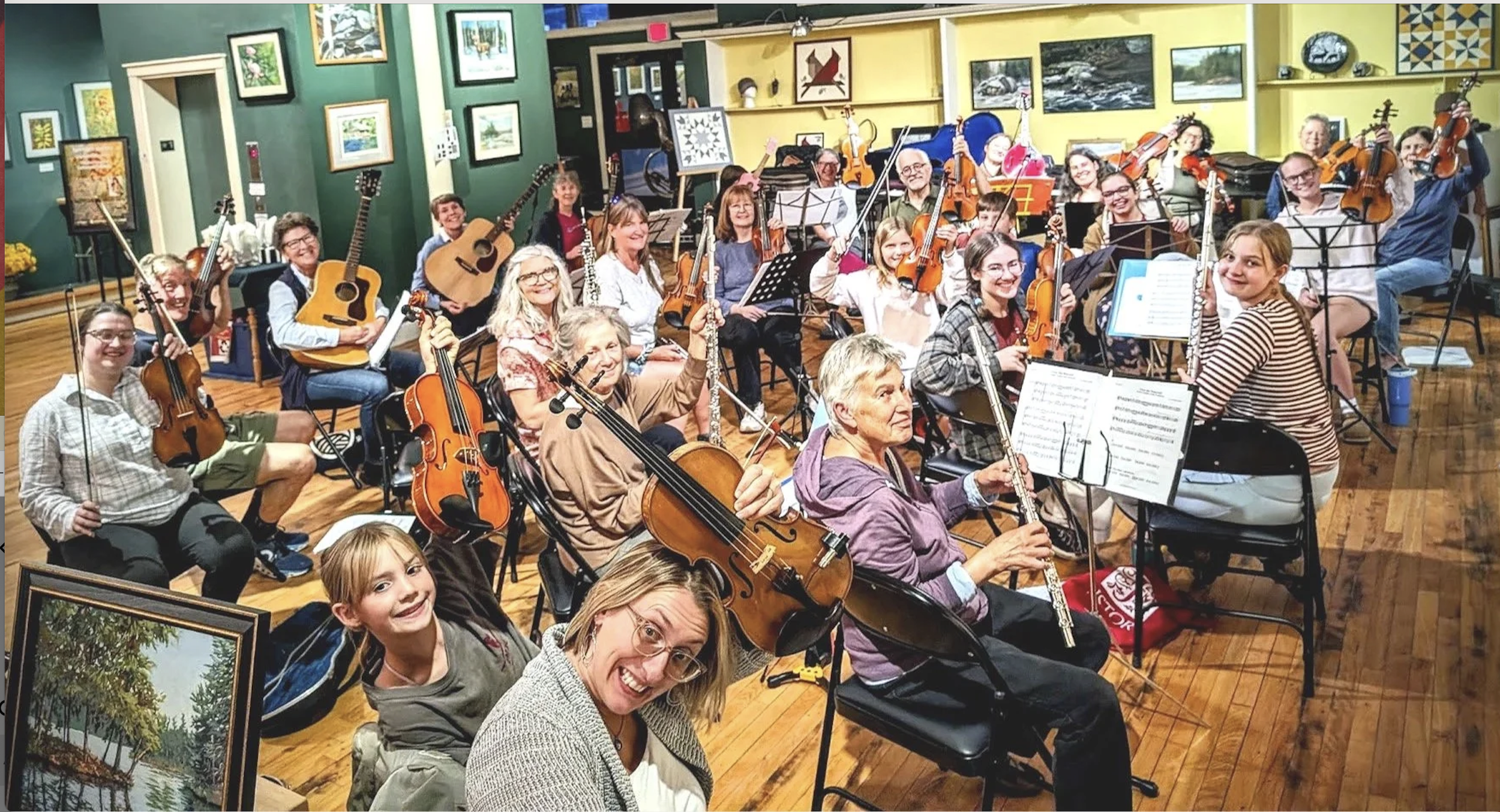
NORTH COUNTRY FIDDLE ORCHESTRA • based in Potsdam, NY.
III. STARTING A FIDDLE ORCHESTRA
Mission statements and goals:
Every fiddle orchestra develops its own style. For my group, I wanted the fiddle orchestra to be a place where musicians could build practical skills they could use anywhere. I plan each semester so that players leave rehearsals with tunes and tools they can immediately take to a jam session, another ensemble, or their own musical projects. (See IV. REPERTOIRE & ARRANGEMENTS)
Naming your ensemble:
We began as the North Country “Folk” Orchestra because we thought the name would feel more “inclusive” to musicians who played instruments other than the fiddle. And we liked that… but over time I changed our name to the North Country “Fiddle” Orchestra because I felt it connects us to a larger network of fiddle orchestras around the planet!
Rehearsal space:
You will need to find a space with good lighting and ample room for musicians (who need more space than you might think to bow or strum an instrument.) We use both the beautiful TAUNY [Traditional Arts in Upstate New York] building and our Potsdam Public Library. You may also want to invest in some music stands and pencils to have at rehearsal for folks to borrow.
Performance Ideas:
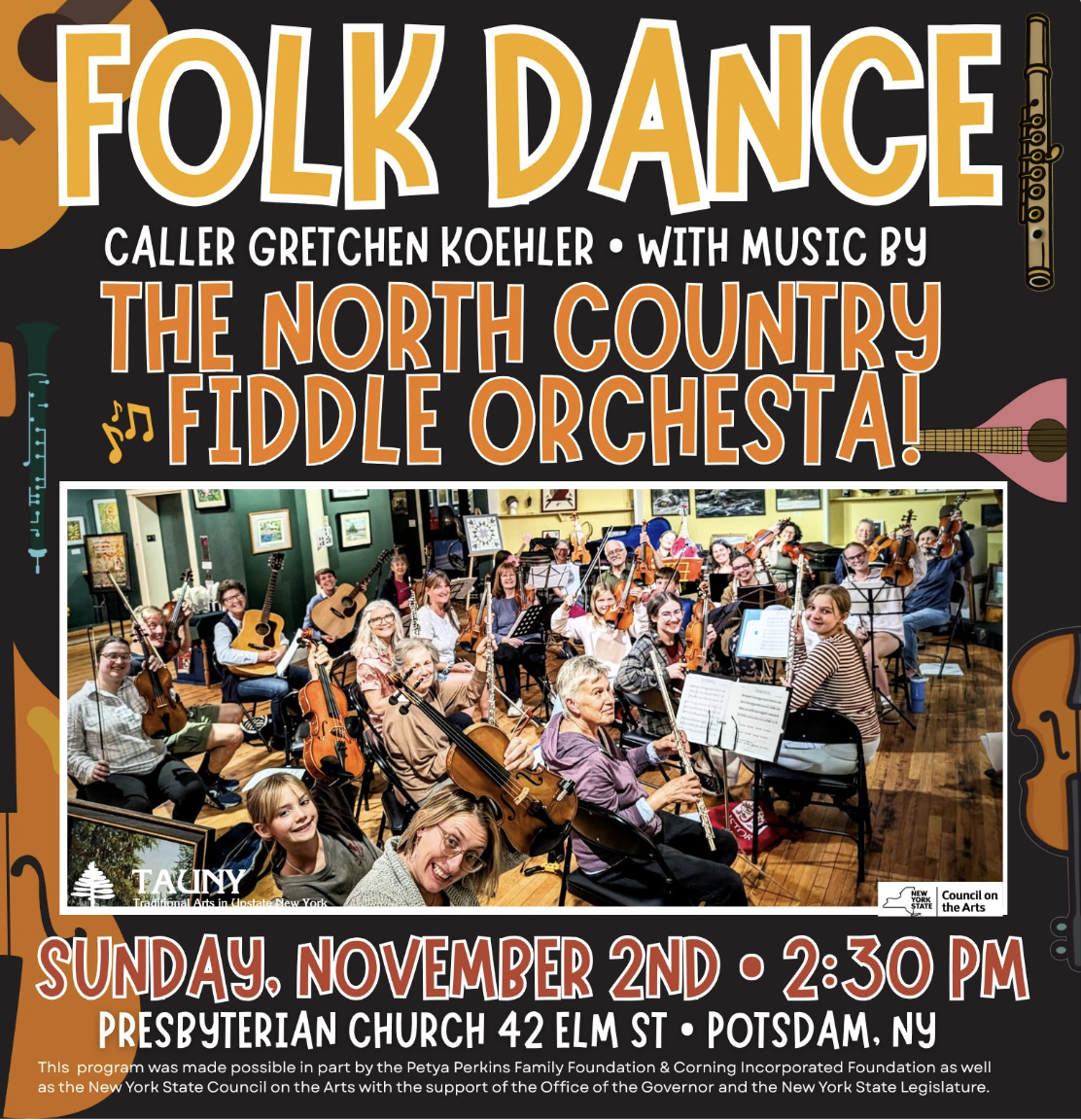
We like audience participation. In addition to inviting audiences to sing along, we’ve had dance teachers give waltz lessons while the orchestra played an afternoon of waltzes, and more recently, I’ve called square and longways sets while the orchestra provided dance music.
Funding/grant writing:
Groups range from informal to formal and are run by volunteers or paid leaders. Our fiddle orchestra has been in partnership with TAUNY [Traditional Arts in Upstate New York] and members pay through the TAUNY website. I always offer a discount to additional family members and musicians under 18. I write up a budget proposal (listing the paid positions, our hourly rate, and proposed schedule of rehearsals, etc.) Adjustments are made after the budget is finalized. Here’s a list of possible roles to get you started.
Music Director – This is the “catch-all” overseeing title for many of the jobs that keep an ensemble successful. As music director, I choose repertoire, plan performances, secure venues, and write a detailed summary of each rehearsal to send out to the members for more focused practice. I write up press releases for radio and print, post regularly on social media, do the graphic design for the registration and performance posters, and maintain a webpage that houses info about the group year-round.
Orchestral Arranger: Keeping in mind the varying skill levels and instrumentation, I write my own orchestral arrangements (See IV. REPERTOIRE & ARRANGEMENTS). I notate the melody and my harmonies on Dorico, and include chord charts in the music for all players.
Conductor: I plan and run rehearsals and performances.
Assistant Teacher: Guitarist Barb Heller is my assistant teacher. In addition to offering tips to the rhythm & bass section during rehearsals, she runs the R&B sectionals. (See V. REHEARSAL STRATEGIES.)
Student Apprentice: I like to give an opportunity to an under 18 student apprentice, a strong melody player who assists during rehearsals, sectionals, and performances. (See V. REHEARSAL STRATEGIES).
Tech person: Barb and I record all the tunes (1 ) under tempo, (2) dance tempo, and (3) with harmony lines using my computer’s GarageBand. I load all the audio files onto DropBox or a Google Drive for each musician who has registered. One semester we had a volunteer record and share audios. We sure missed him when he moved!
Board of Directors: Some orchestras have a board of directors, often made up of members of the ensemble, including a President, Vice President, Treasurer, Orchestra Manager, and board members.
IV. REPERTOIRE & arrangementS
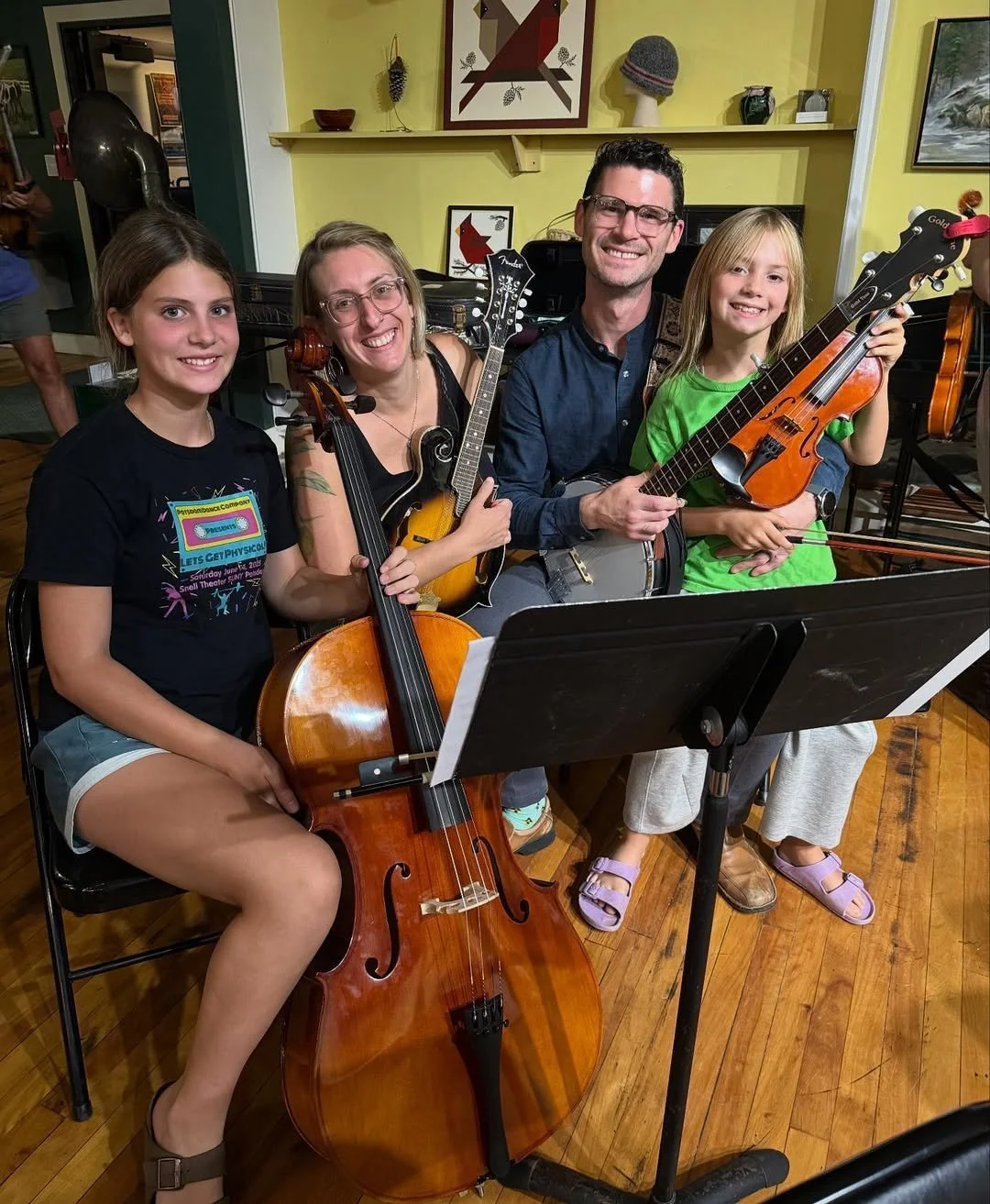
The McKenna Family at a North Country Fiddle Orchestra rehearsal. (McKenna photo)
Choosing Repertoire:
Due to my schedule, The North Country Fiddle Orchestra only runs during the fall semester, so I need to choose tunes with melodies and chord progressions that are doable a short rehearsal period. When selecting tunes, I keep my beginners in mind by choosing simple melodies and then adding layers of rich harmonies to satisfy our more advanced players. (See “Arrangements for beginning melody players” below).
I also limit the number of keys we play in (usually just one or two) which gives beginning rhythm and bass players a chance to build confidence and strengthen their skills. As we get the basics down, my assistant teacher and guitarist, Barb Heller, introduces advanced picking patterns, walking bass lines for more advanced players. (See V. CUSTOMIZING YOUR ARRANGEMENT.)
Arrangements for beginning melody players:
As I mentioned, my goal is for players to be able to walk out of rehearsal and easily join a jam session. Because of that, I don't teach beginning melody players a simple, half-note harmony that only works within our specific arrangement. These types of harmonies don’t easily transfer outside of our ensemble.
Instead, I look closely at the melody and pull out an alternate melody (aka "melody lite”) and come up with an extremely simplified version of the melody that blends naturally with a fuller melody line as it is being played. In the example below, the alternate melody (Alt) gave the beginners a meaningful part to play while allowing them to gradually add more melody notes as they were able during the semester, and in the months that followed.
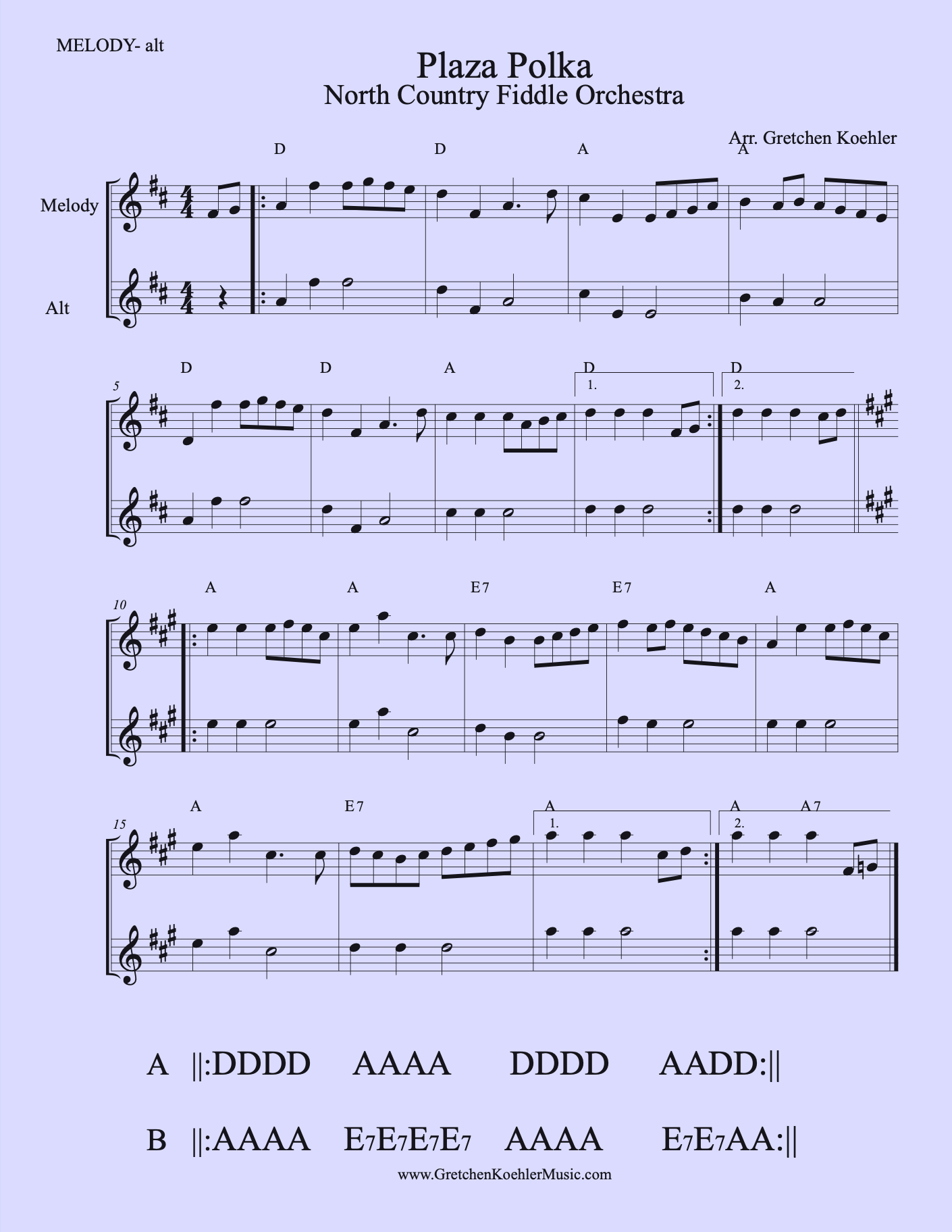
NCFO Sample of alternative melody option.
Adapting Melodies to Trad Keys:
We talk openly as a group about what is and isn’t working for each player, because we are a team and we wanna sound good!
Many fiddle orchestras include classical musicians who aren’t used to the idea of changing the notes on the sheet music. Some ensembles adjust the traditional key of a tune to better fit instruments like cello or viola (ie. avoiding melodies that sit heavily on the fiddle’s E string) or change the key to better fit their woodwinds’ range. That’s a perfectly reasonable approach, and it works well in many settings.
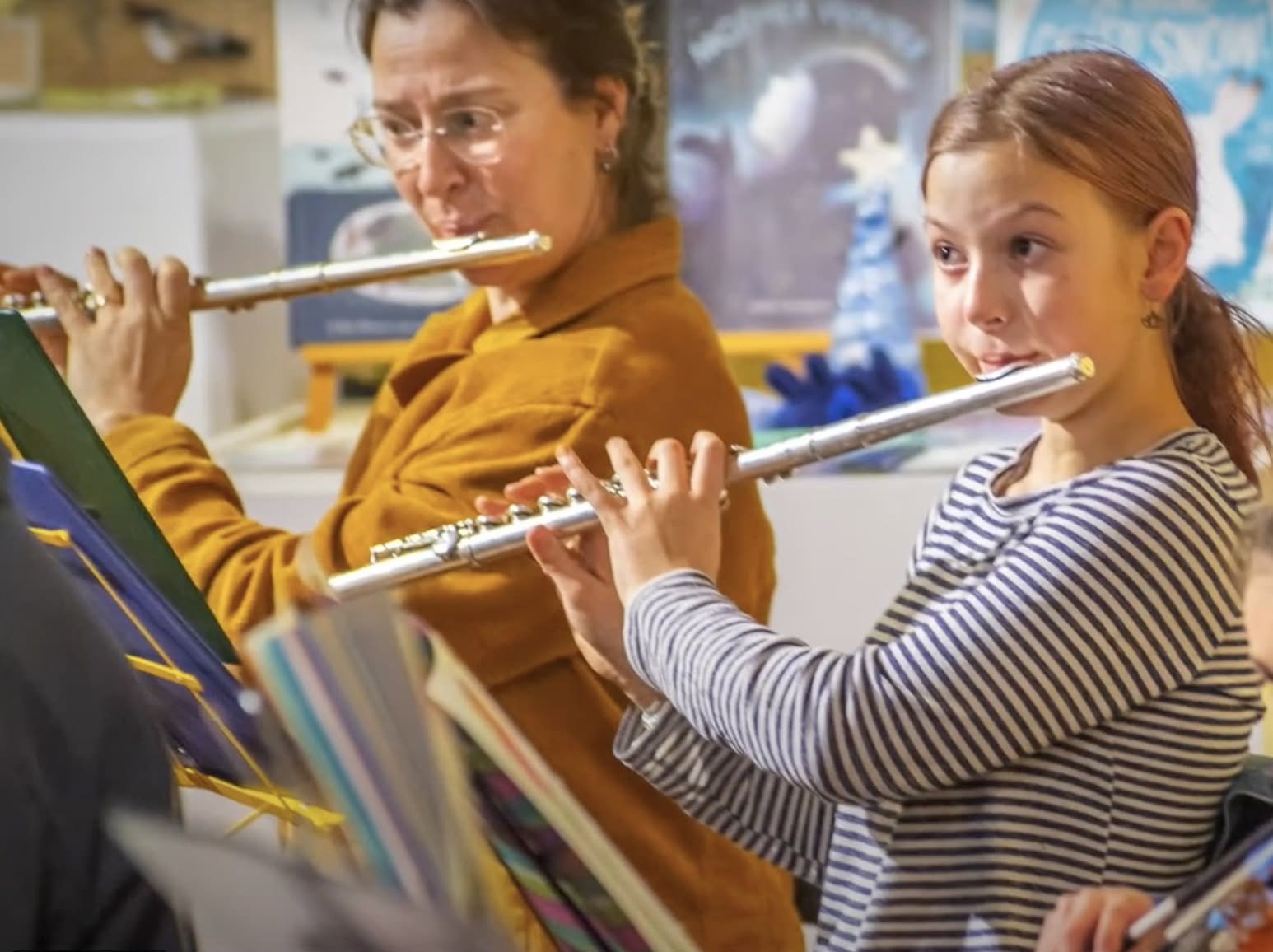
Woodwinds in the North Country Fiddle Orchestra. (Watertown Daily Times photo)
For our orchestra, I keep tunes in their traditional fiddle keys so players can leave rehearsal and be able to play the tune “in the wild.” We problem-solve by moving passages up or down an octave or adjusting a few notes to fit an instrument’s range. These moments become valuable learning opportunities.
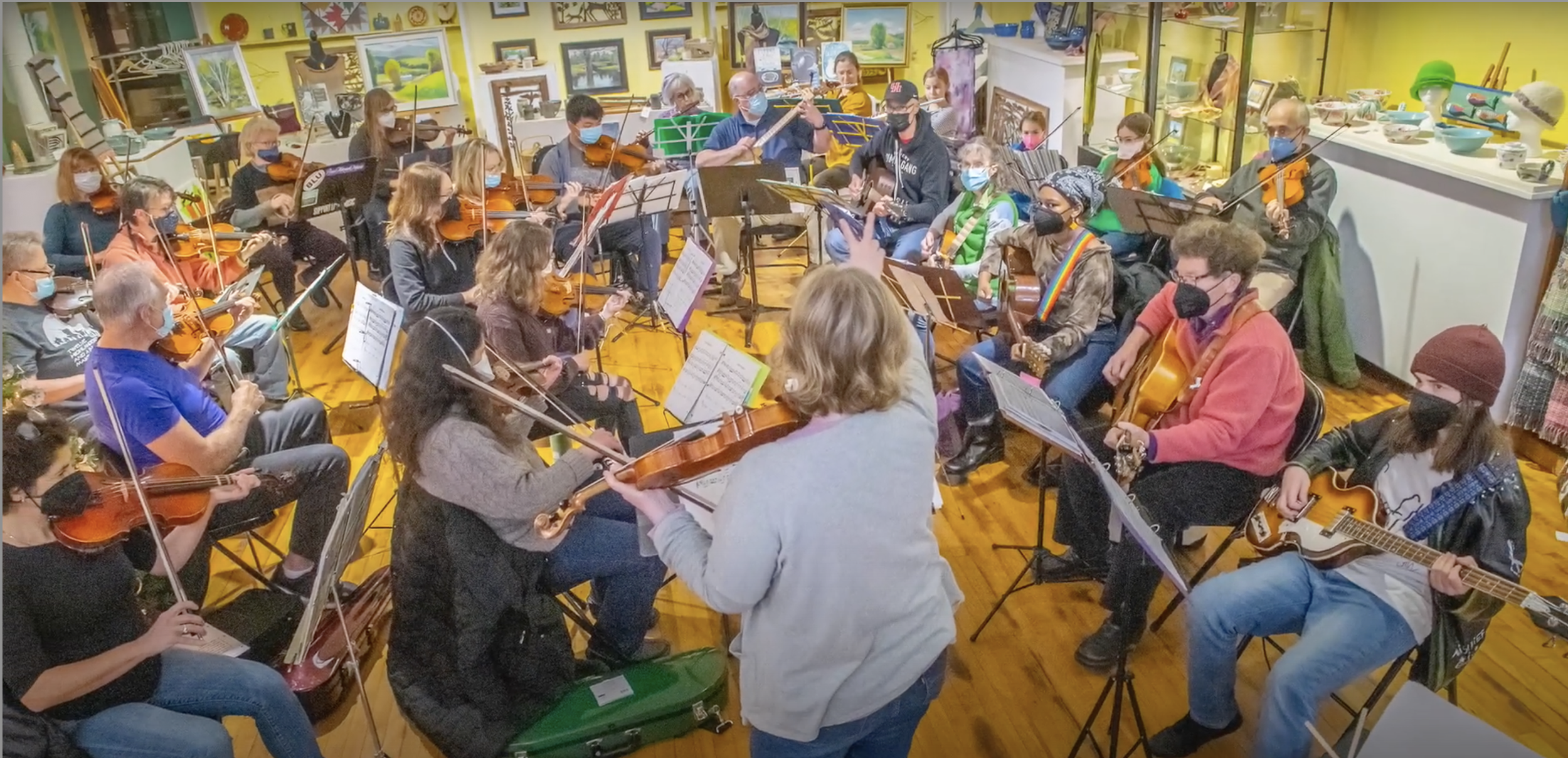
The North Country Fiddle Orchestra Rehearsal (Watertown Daily Times photo)
v. REHEARSAL STRATEgIES
Group ear training:
David Kaynor of the Vermont Fiddle Orchestra and I had a good conversation about the importance of playing by ear. Many players are strong readers and naturally lean on sheet music when available. I think about this often growing up as a traditional old time fiddler (only learning tunes by ear) who happens to also be a classically trained violinist.
Before each rehearsal, David decided to play an unfamiliar tune by ear, giving the early-birds a chance to learn without notation. This practice gradually strengthened listening skills, not to mention encouraged punctuality as folks came early to learn a bonus tune!!
I’ve carried that idea forward and now include some form of ear training in most of our rehearsals to keep us connected to my aural tradition.
Musician’s Packet:
Once players register, I send out a short questionnaire asking what instrument they will play, primary genre (if not folk), playing experience, and goals. I send out audio tracks of the melody (walking & dance tempos), harmonies, sheet music (in various clefs), and chord charts.
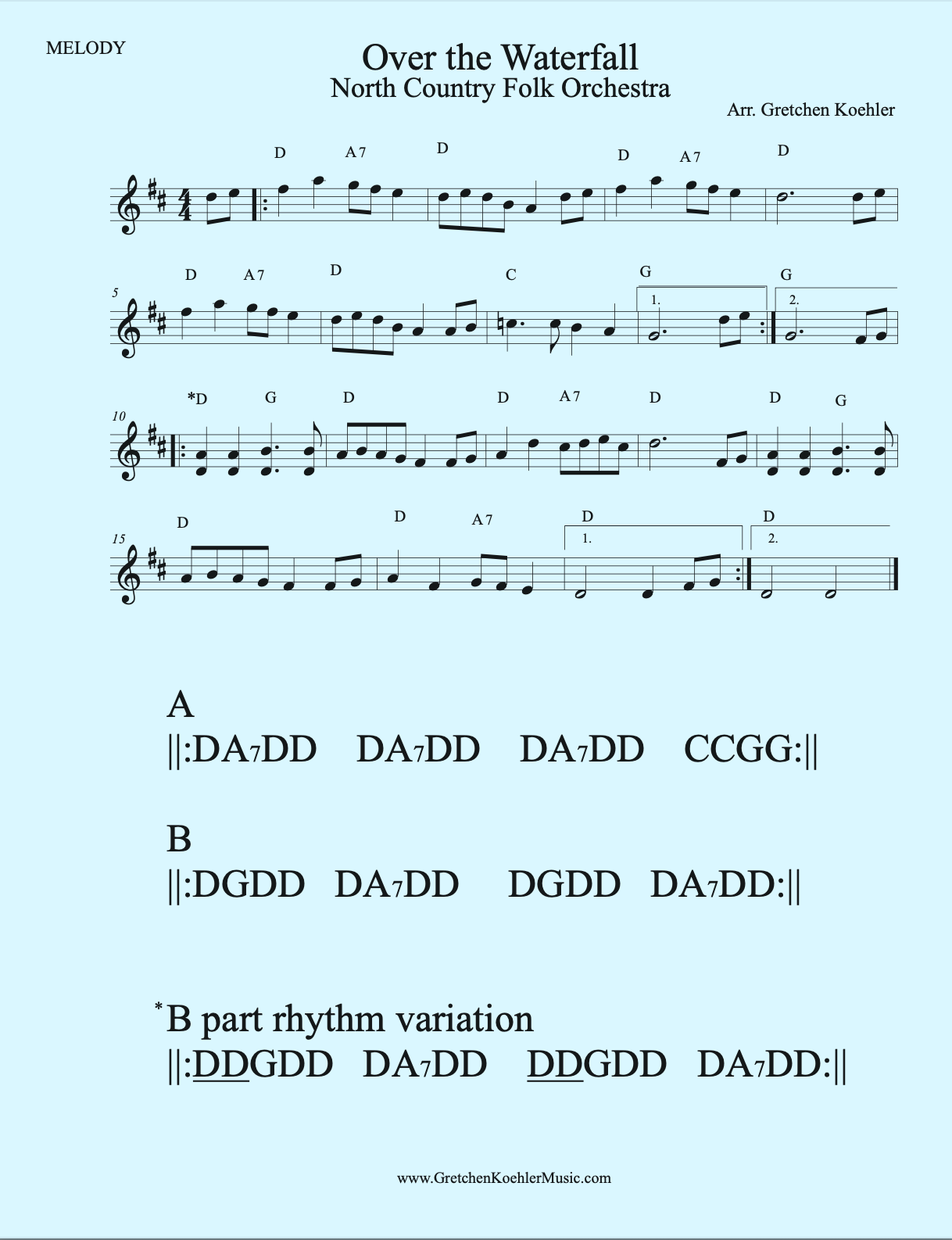
Sample melody (bass clef) for the NCFO.
Steps for introducing a tune:
I feel strongly that everyone should know the melody and base line (chord progression) of a tune and I take valuable rehearsal time to ensure everyone can do this. Many players have told me that knowing what the “other “ part is doing has really helped them become better ensemble players.
All instruments play the bass line: All instruments start on the bass line and move through the chord progressions as a group using long notes. I play the melody as they do this to get the tune into everyone’s ear. Once we have a cohesive base line, I invite players to do chords (fiddlers, guitars, etc.) one strum to match our long note bass line. I play the melody as they do this to get the tune in everyone’e ear. I invite those who know strum patterns to layer it onto our long note bass line And, you guessed it, I play the melody to get it into everyone’s ear.
All instruments play the melody: Not all of our instruments can easily play a fiddle tune melody, but we start by humming, singing, and/or whistling the tune, then put the melody on our instruments as we are able while some of us continue to sing.
Sectionals:
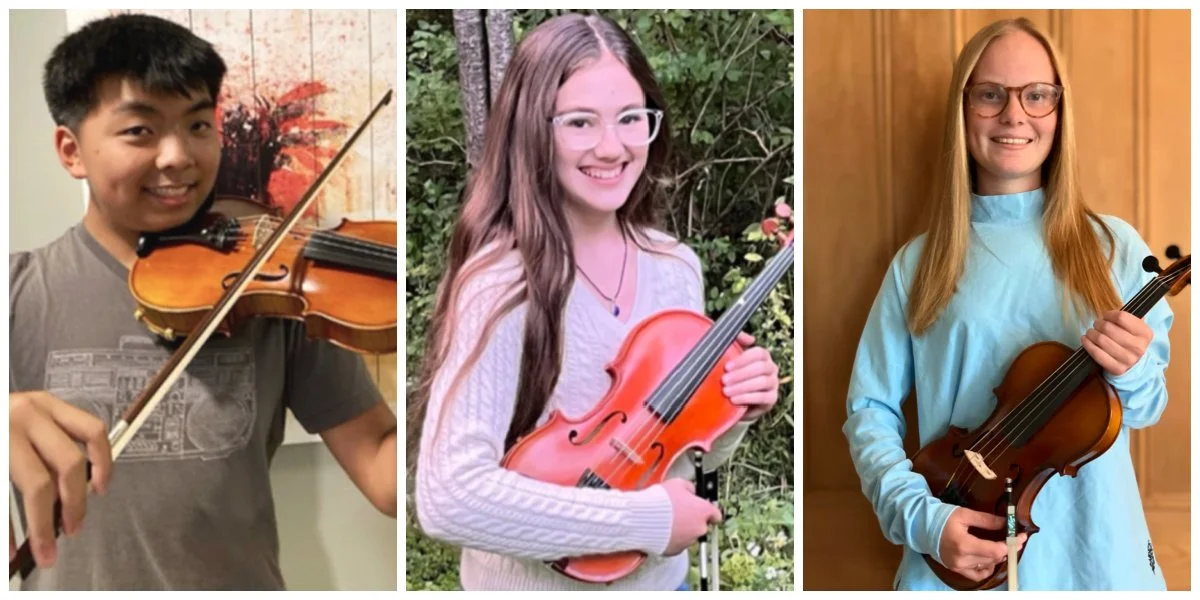
The North Country Fiddle Orchestra Student Apprentices: Eric Choi, Brianna Dixon, Lena Frank
We are fortunate to have a space where we can occasionally divide into a melody and rhythm/bass group. It has been particularly helpful to have a student apprentice who can step in and provide melody for the R&B sectional. That student can easily switch between melody, chords, and bass line. Note: Players who play both melody and chords (ie, mandolins or fiddlers working on their chording) can choose which group they want to work with that day.
In addition, melody players who are feeling less confidant on their part (whether the tempos are uncomfortably fast or the melodies are finger twisters) are always welcome and encouraged to join the R&B group and play the bass line. This flexible setup is designed to meet players where they are.
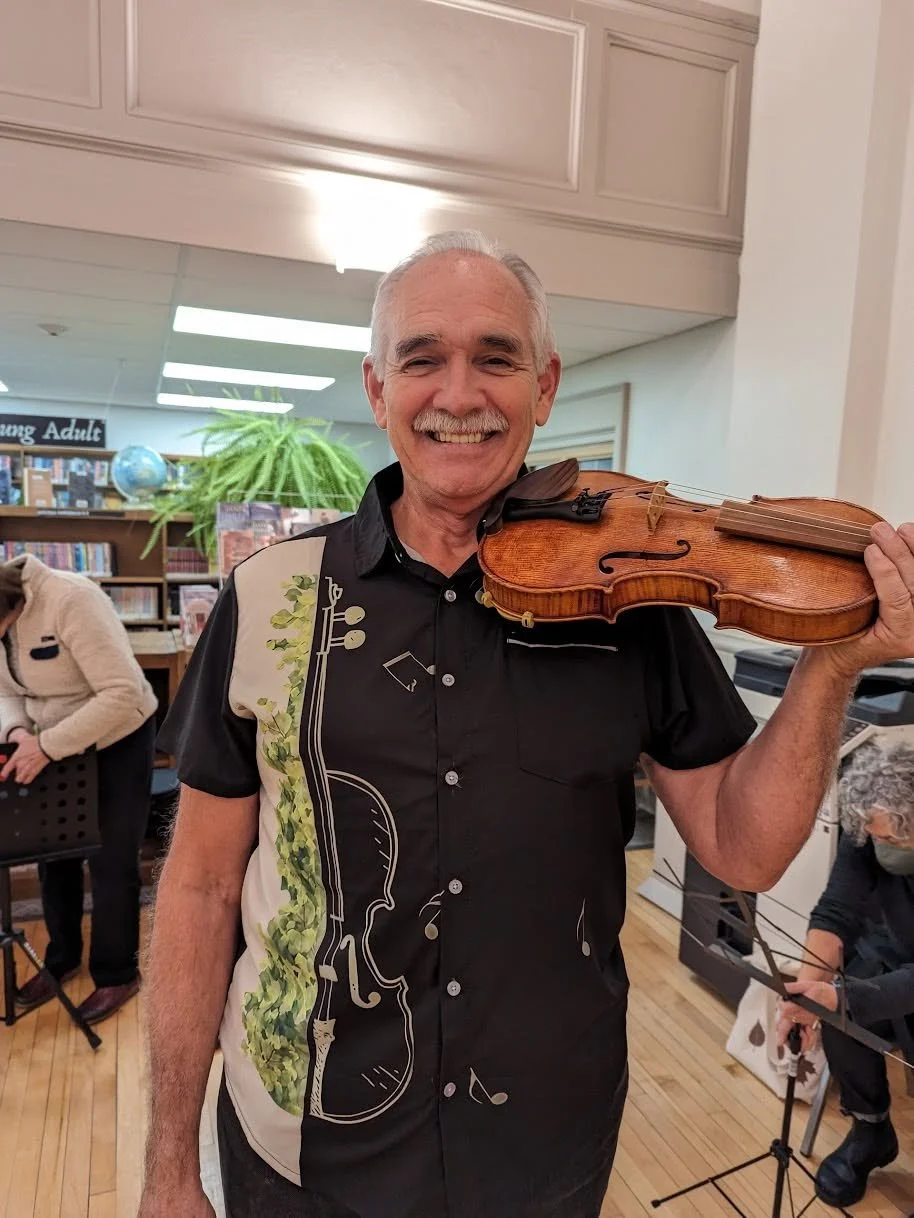
North Country Fiddle Orchestra member, Steve Bateman. (Koehler photo)
Customizing Your Arrangements:
To the surprise of my classical musicians, we won’t have a final arrangement until a few weeks before our public event. Leaning into the strengths of our players, we make the arrangements that best show off who we are that semester. I decided the final arrangements, but I listen to input from the group to inform my choices. This works well for our group.
Basic: We often start a tune with a straight forward melody and accompaniment.
Harmony: We decided when and what harmonies (high, low, both) will happen by trying them out and having group input on what sounds good.
The “Feature:” We often include a “feature” that highlights a subset of the group. In the past we’ve featured our outstanding whistler, our under 18 players, our woodwind section, a bass solo, while the rest of the group provides accompaniment. (Good thing we all know the bass line, eh? (See “Steps for introducing a tune” above.)
Open arrangement: At some point in an arrangement, I holler, “CHOOSE YOUR OWN ADVENTURE!!” which means to do what ya want (within the boundaries we set up as a group ahead of time, it no alternative chords or anything that would not blend well. ) Personally, I love doing this!! It gives my players a real sense of the i”n-the-moment” playing so many of us folk musicians know so well.
Accompaniment style: Beyond a standard "boom-chick" pattern, we try different approaches such as strumming only when a new chord appears ("Play the Change") or only on the first beat of each phrase ("1st of 4"). Encourage creativity, experiment with new ideas, and give labels that your group can easily remember. I can yell “Don’s Favorite” with a wink and we all know what to do.
Texture: We experiment with pizzicato, tremolo, dynamics, adding group pauses…. use your imagination!
Last note/intros: As a group, we like to decide how we will start/end a piece. Again, it doesn’t need to be fancy, just clear to all players.
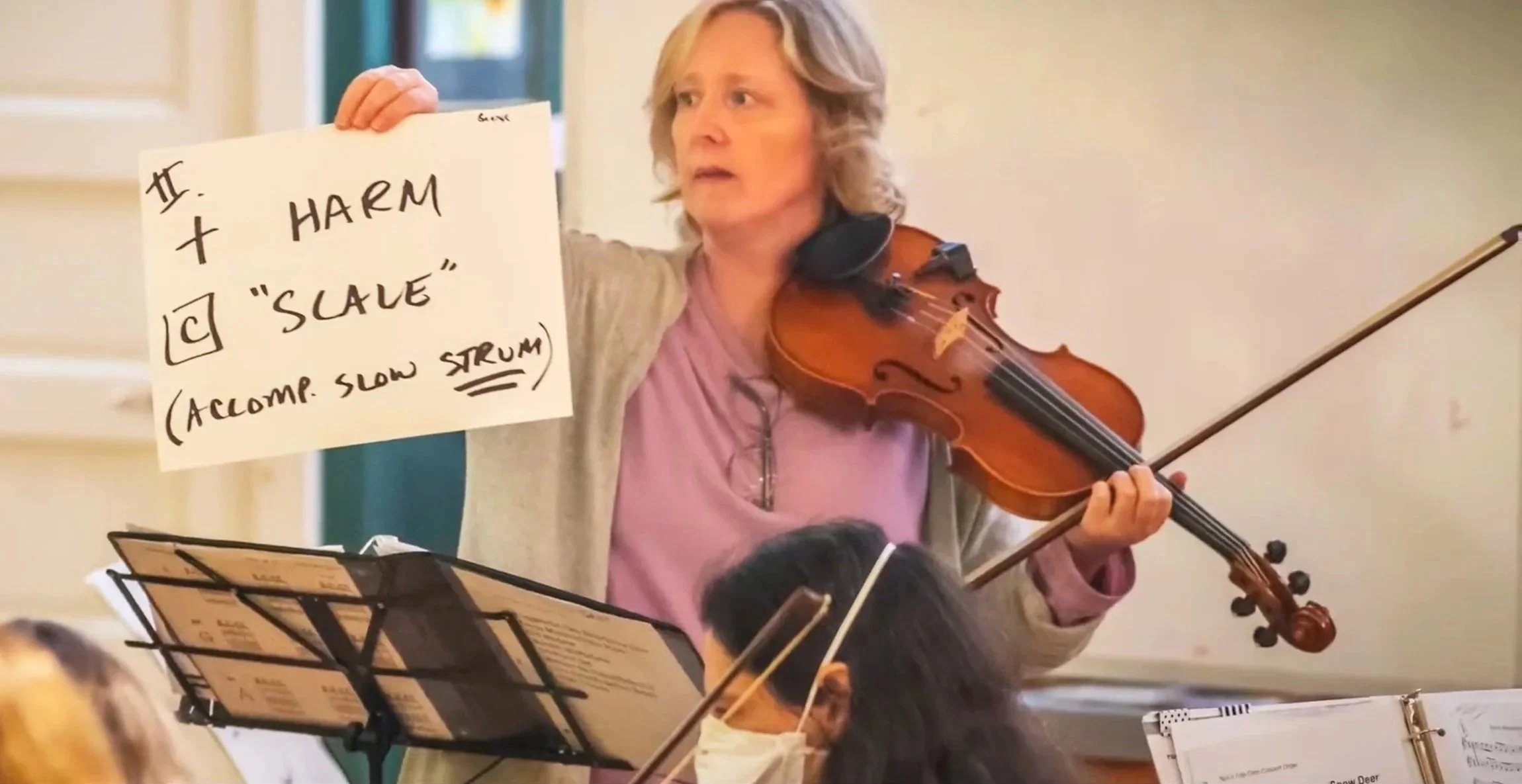
North Country Fiddle Orchestra rehearsal. (Watertown Daily Times photo) The ensemble tests their ideas before the final arrangements are locked into place.
I print this up for my players who like to know the plan, and I yell it out (very short phrases) on the spot at the concert. This educates the audience, too. As you can see, most of the tunes follow a fairly predictable format… the tune 2x, then a feature of some kind, then a “choose your own adventure.”
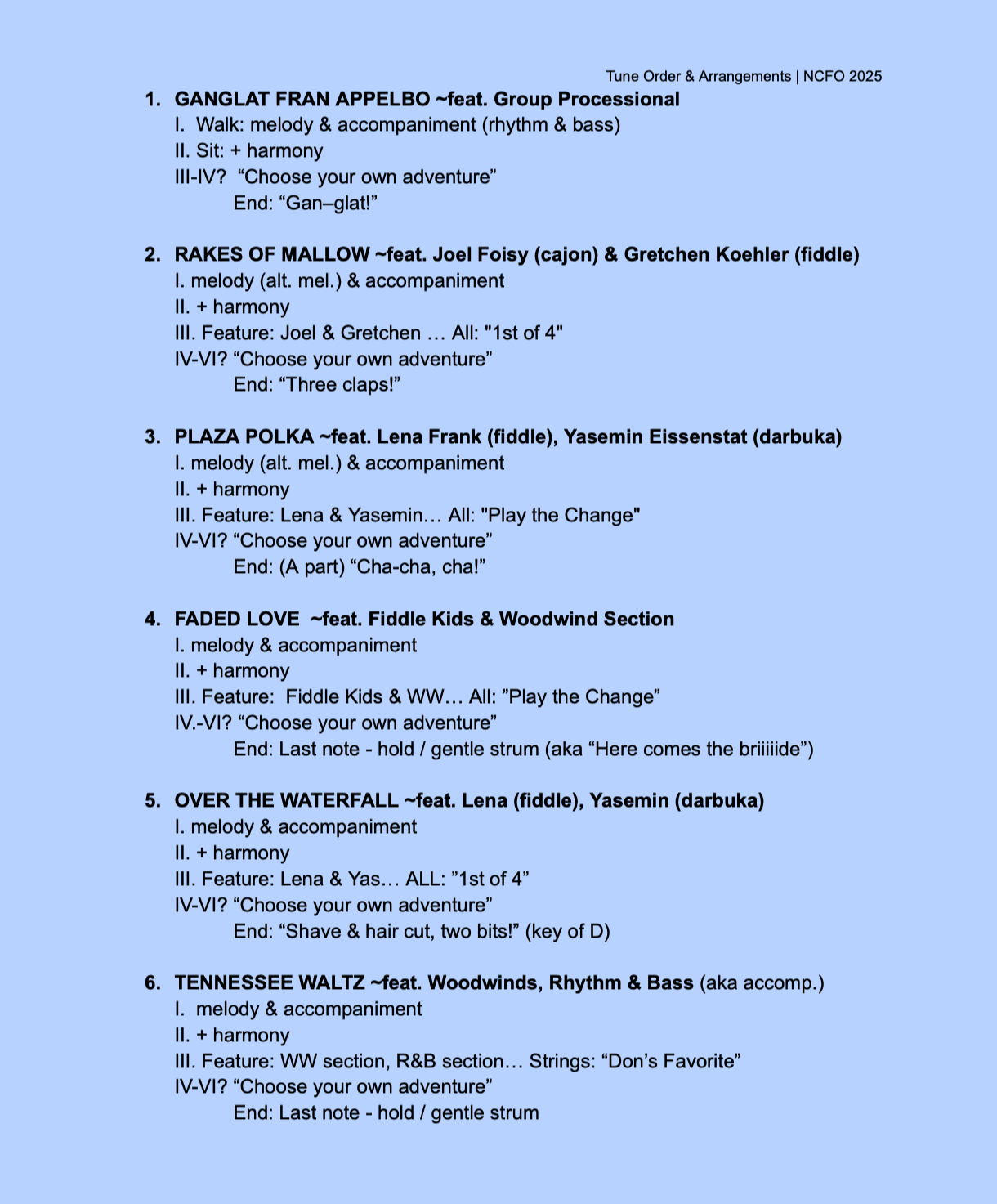
A sample of the NCFO final arrangements. The nicknames/labels/instructions only need to make sense to the ensemble! Have fun building inside jokes and cute short hand as your group learns to communicate ideas.
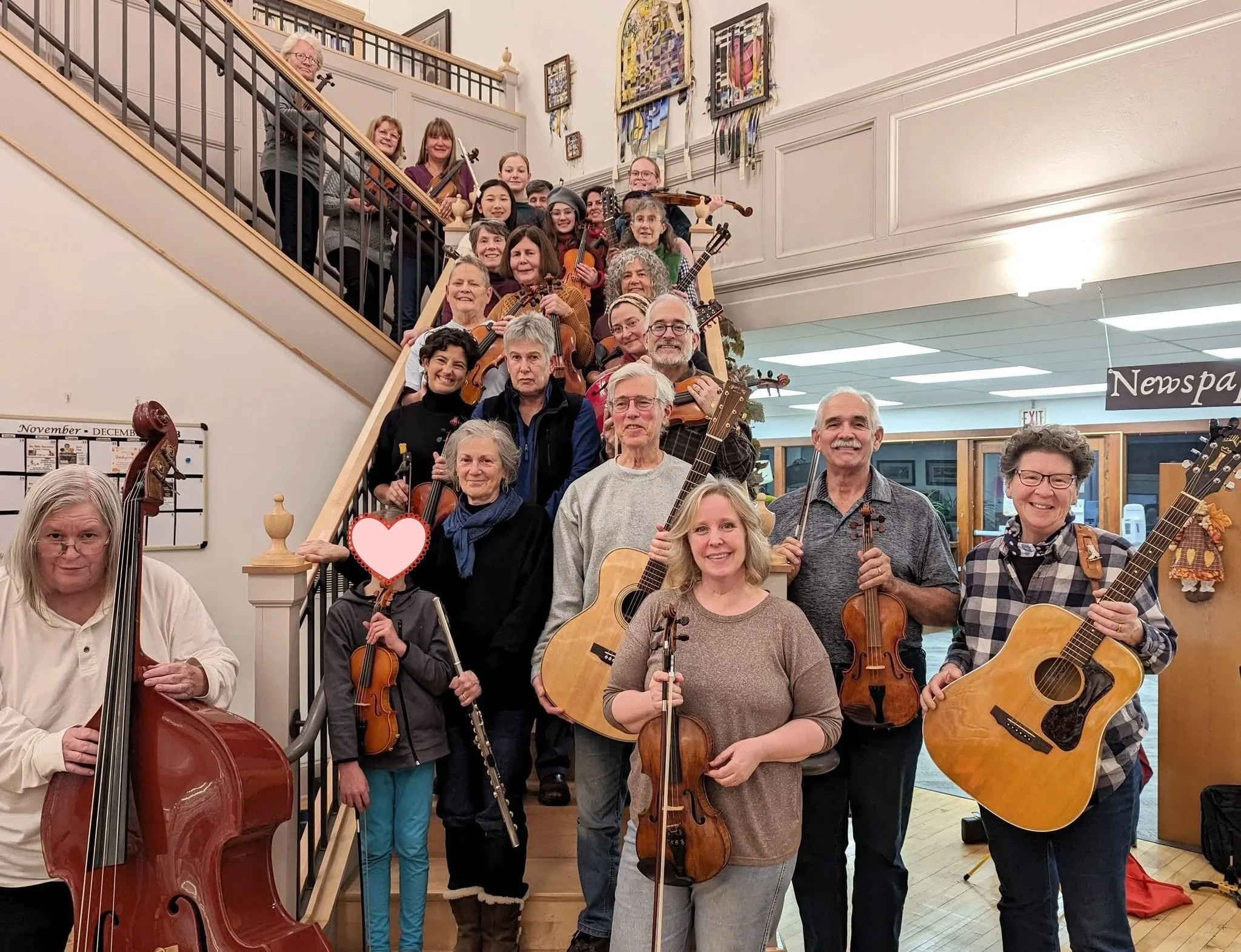
The North Country Folk Orchestra 2024
VI. NCFO ARRANGEMENTS & RESOURCES
When my friend Don Roy of Fiddle-icious heard I had started a fiddle orchestra, he immediately reached out and encouraged me to explore his group’s materials on their website. It was a generous and welcoming gesture that I wanted to some day offer, too!
Below are some of my arrangements for the NCFO. Feel free to use them and adapt them to fit your own group. The following (mostly) contain audios of fiddle & guitar, melody and harmony sheet music with chord charts. If you have any questions or need help downloading files, contact me!
Madstop March (Koehler) in the works!
North Country Air (Koehler) in the works!
Potsdam Polka (Koehler) in the works!