FwT: The Story of Ice Harvest Reel
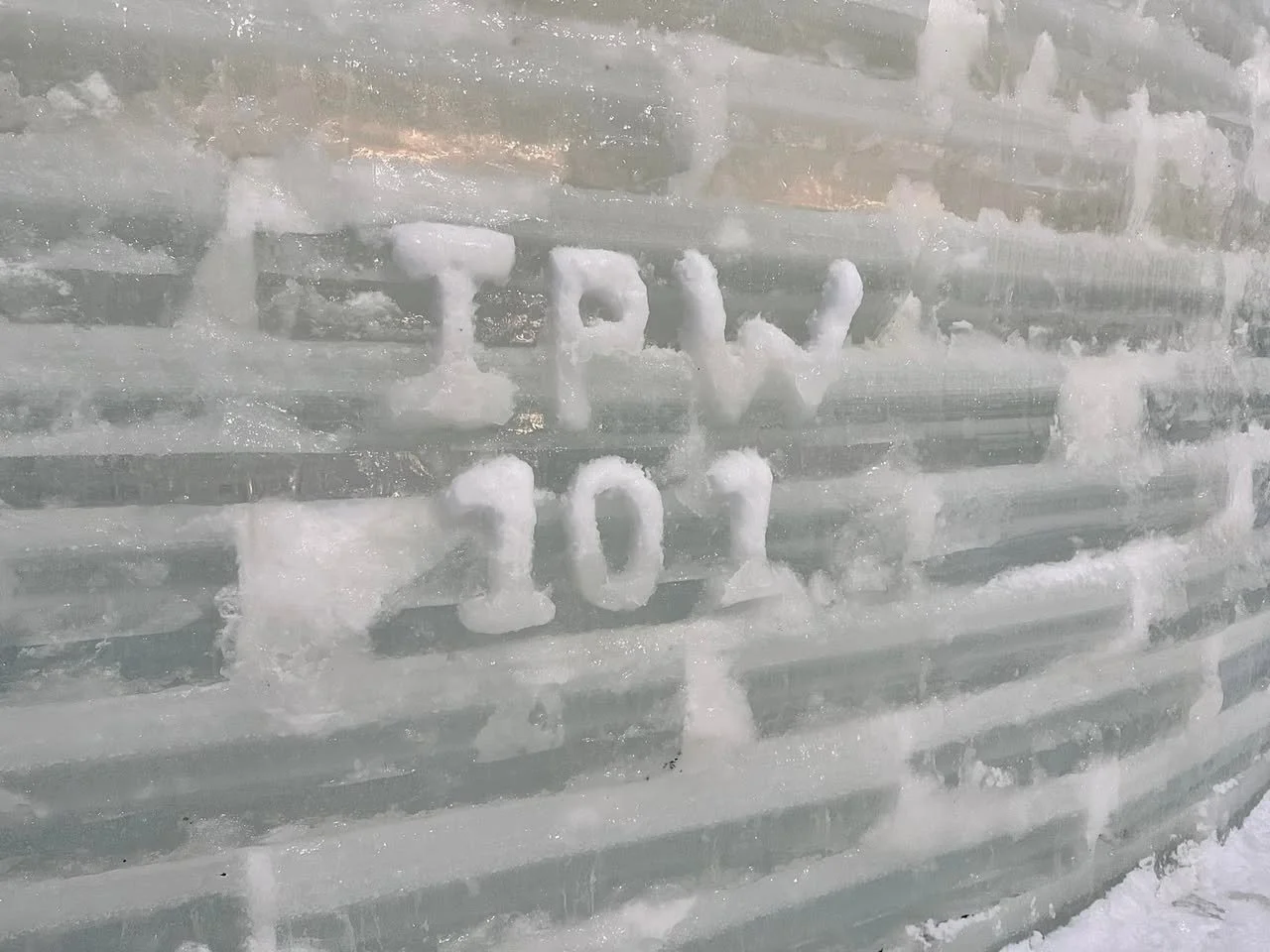
Venture onto the frozen lake where the fiddler’s bow saws into the ice! This edition of Fiddling With Traditions features the IPW-101 -the volunteer crew that builds the annual ice palace in Saranac Lake, NY.
NEXT ADVENTURE • ICE HARVEST
2022 and 2023 were a whirlwind of creativity as I embarked on a new project, Fiddling With Traditions. With grant funding, I spent two years researching, interviewing, filming, editing, directing, producing, composing, recording, (huff, puff), writing scripts and articles, and performing. It was a thrilling/massive undertaking.
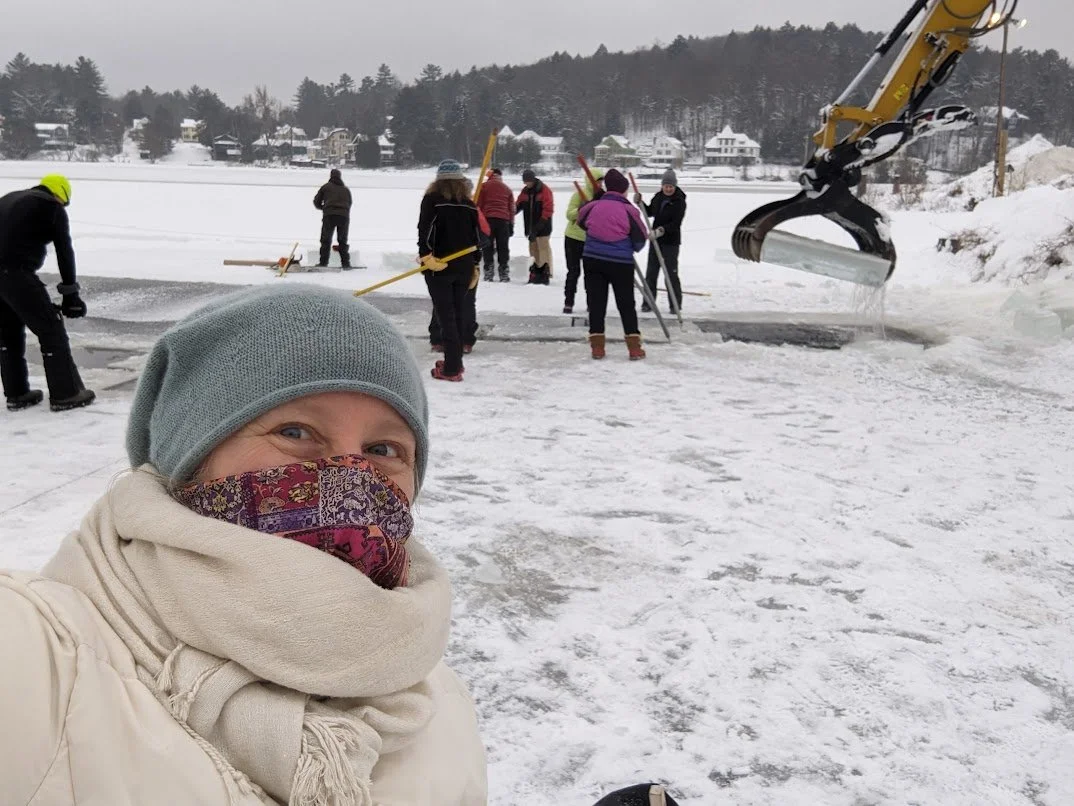
Fiddler Gretchen Koehler filming during the 2024 Ice Harvest, Saranac Lake, NY.
By the end of the grant period, I had more than enough material to call Fiddling With Traditions “complete.” Yet the process was one of deep personal learning, sparking a growing “tradition wish list” and a strong yearning for more.
At the same time, the pace of the past two years had been intense. Rather than applying for additional grant funding, I chose to work slowly, without pressure or expectation, letting the project unfold alongside my regular teaching and performing schedule.
In January 2024, I found myself bundled up on the frozen surface of Lake Flower in Saranac Lake, NY filming the Ice Harvest.
RESEARCH
A few weeks before I went on location (aka the frozen lake!) I prepped by digging through the archives of NCPR’s “North Country at Work” series. I listened to the voices of men who had done this incredibly difficult and dangerous work. The melody I would compose would need to reflect the sheer physical strength and cold hearty spirit of the ice harvesters.
“The melody I would compose would need to reflect the sheer physical strength and cold hearty spirit of the ice harvesters.”
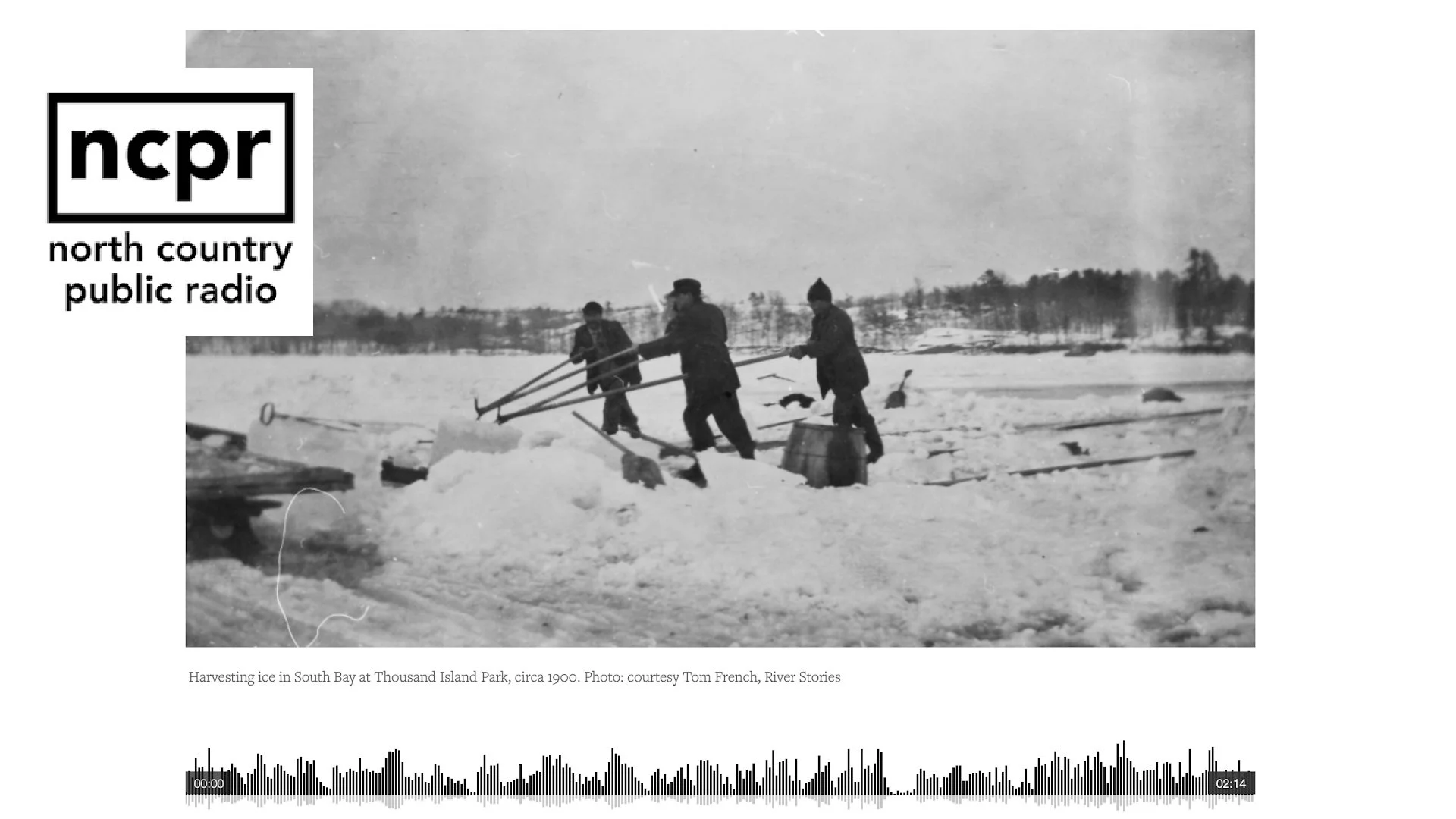
LINK: North Country at Work: Ice Harvesting on the St. Lawrence
WINTER CARNIVAL • SARANAC LAKE, NEW YORK
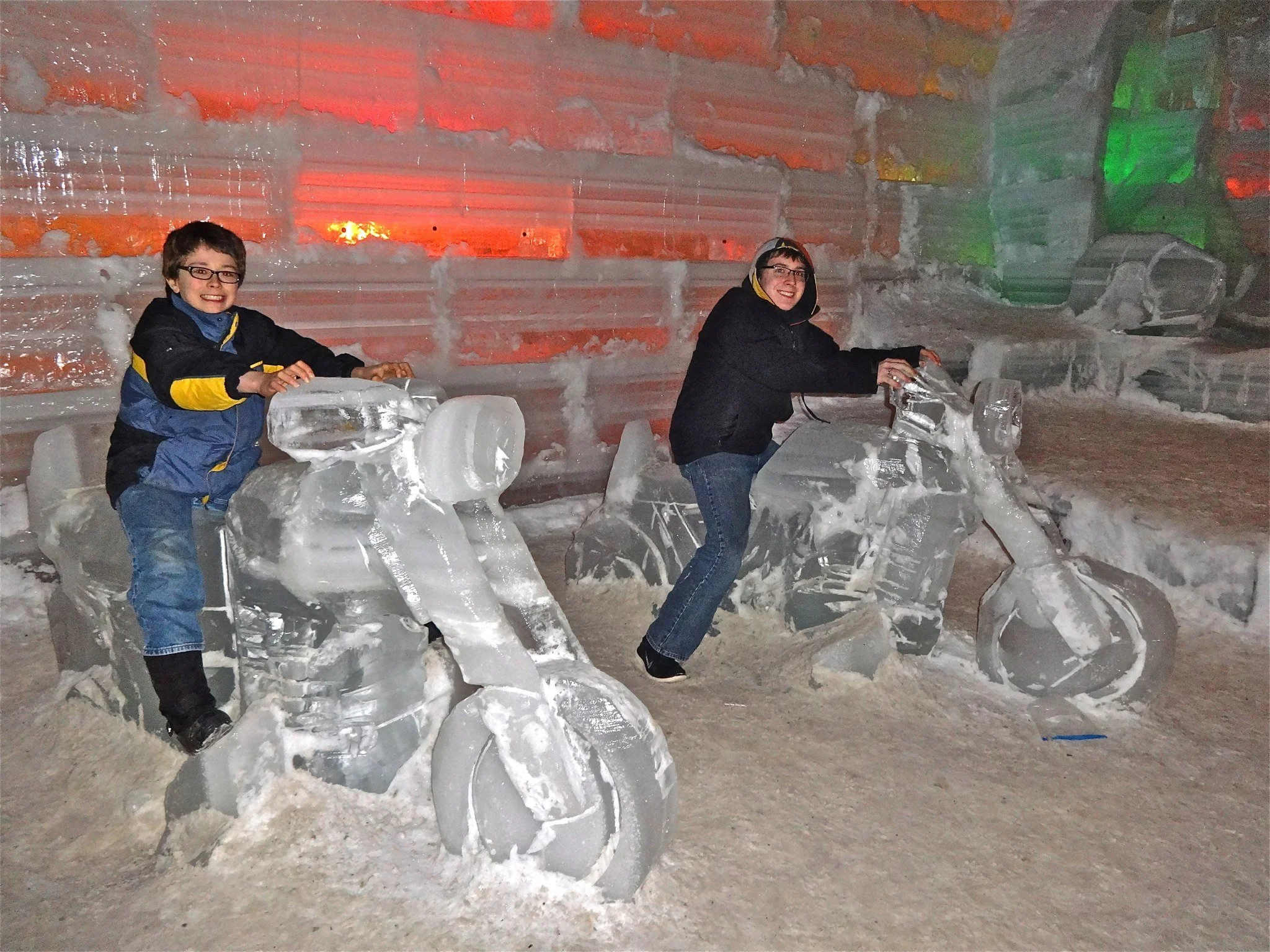
My family has long enjoyed visiting the ice palace at the annual Winter Carnival, but living an hour north, we’d never seen the actual building process. And you can’t just walk out onto the open ice to film whenever you’d like, so I contacted the IPW-101 [Ice Palace Workers] to explain my project and sign the necessary safety papers.
I also reached out to Tom French, a friend of mine whose grandfather, Thomas Mitchell, had been an ice harvester. I had heard his grandfather’s voice during my NCPR research. Tom is the author of River Views: A History of the Thousand Islands in 3-D and created the online oral history site River Stories, based on his grandfather’s recordings. Rather than meeting for coffee, we met out on the frozen lake (with crampons strapped to my boots!) to experience the process firsthand.
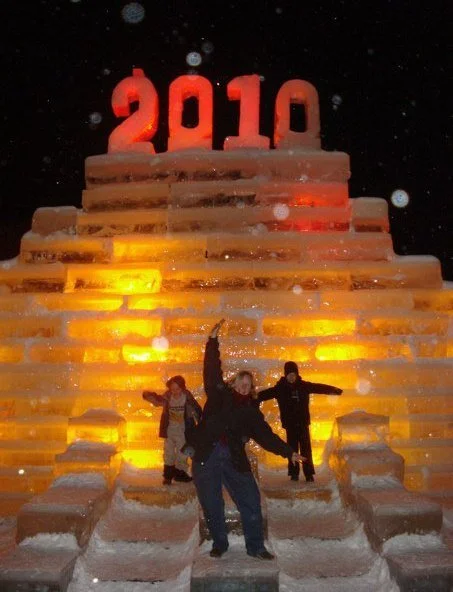
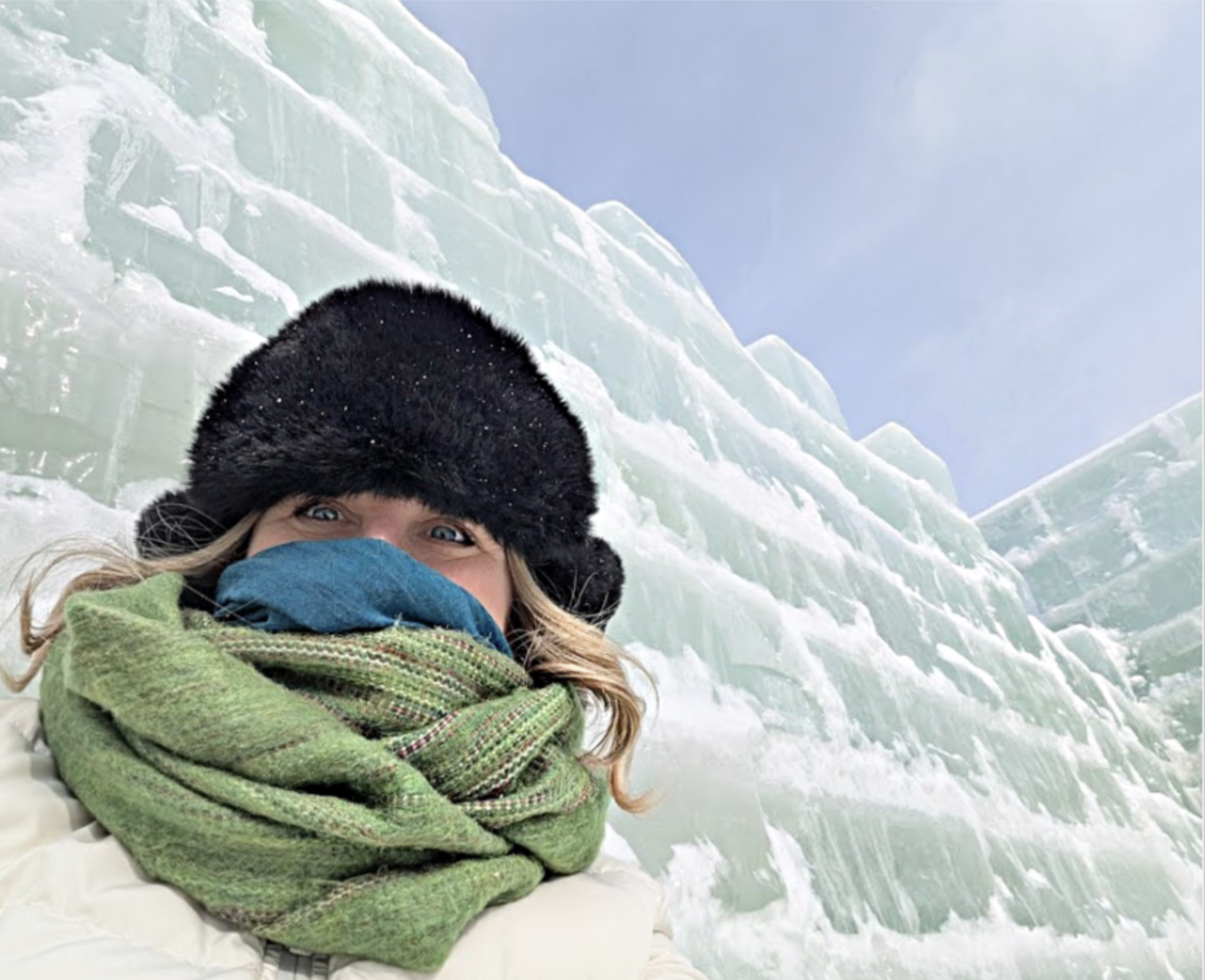
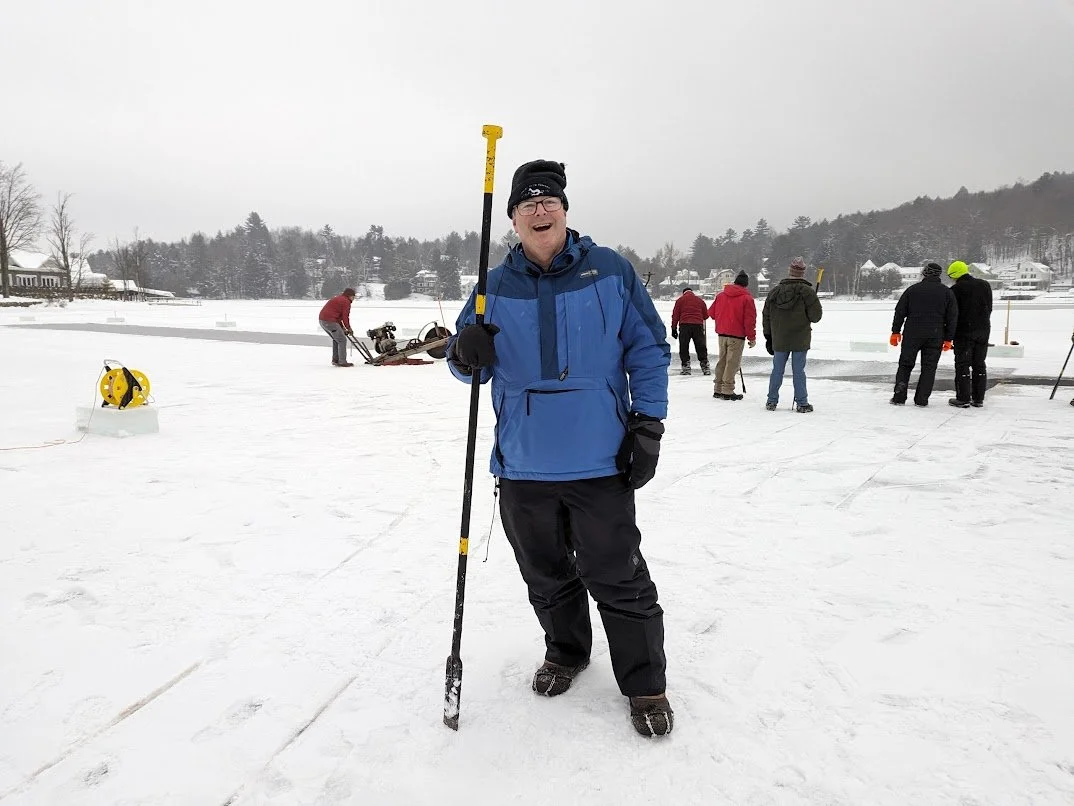
Tom French - author of River Views: A History of the Thousand Islands in 3-D
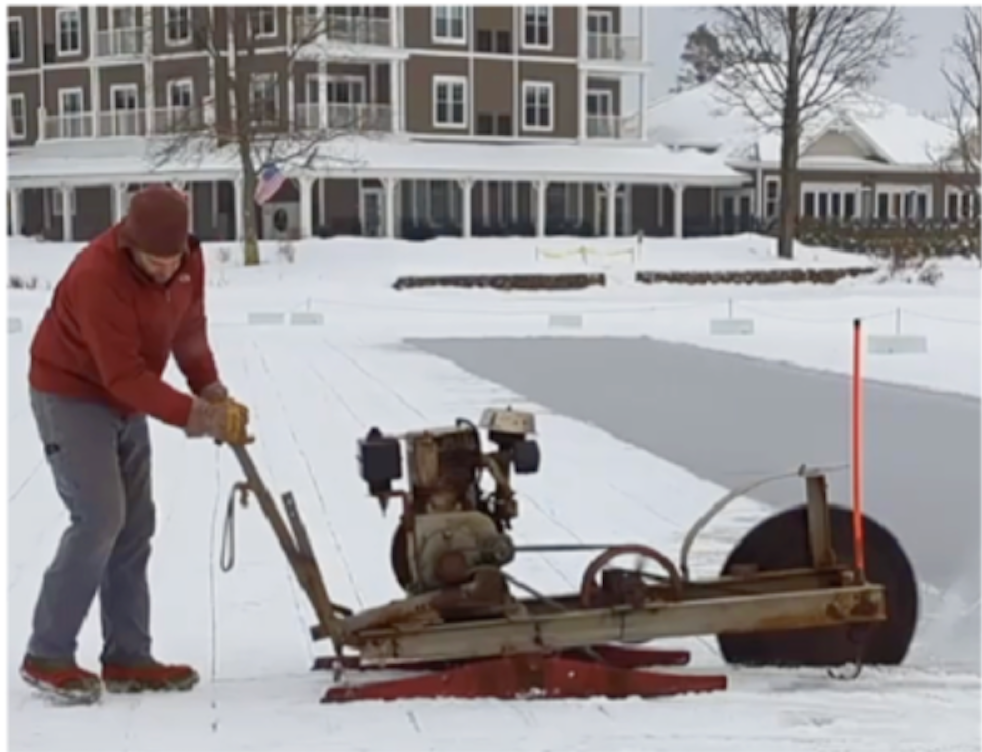
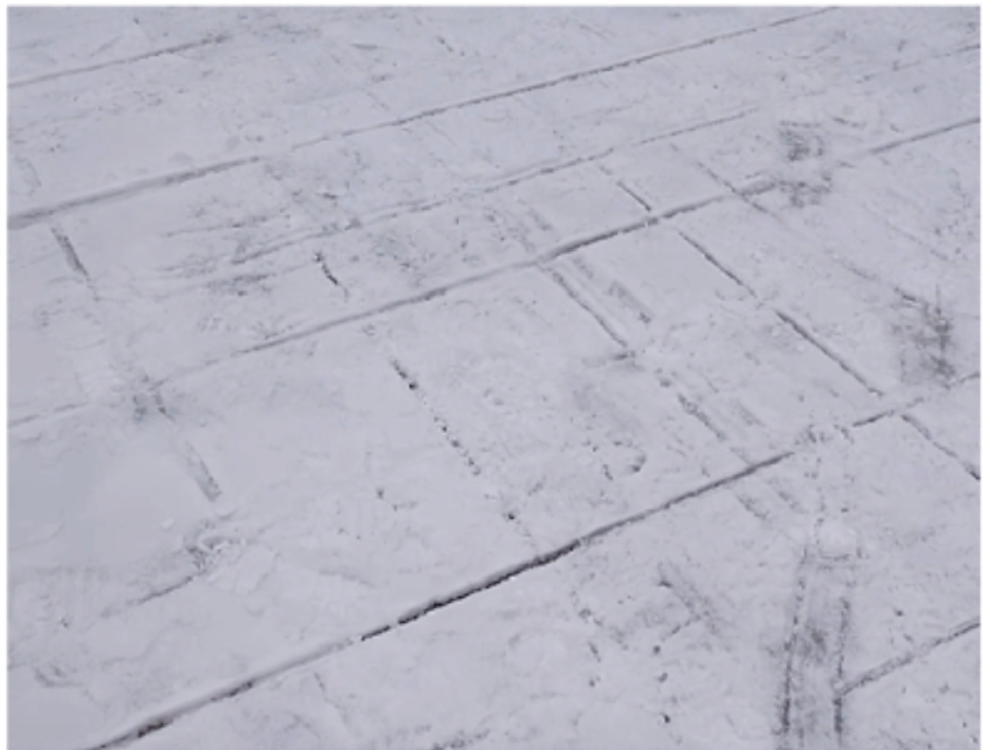
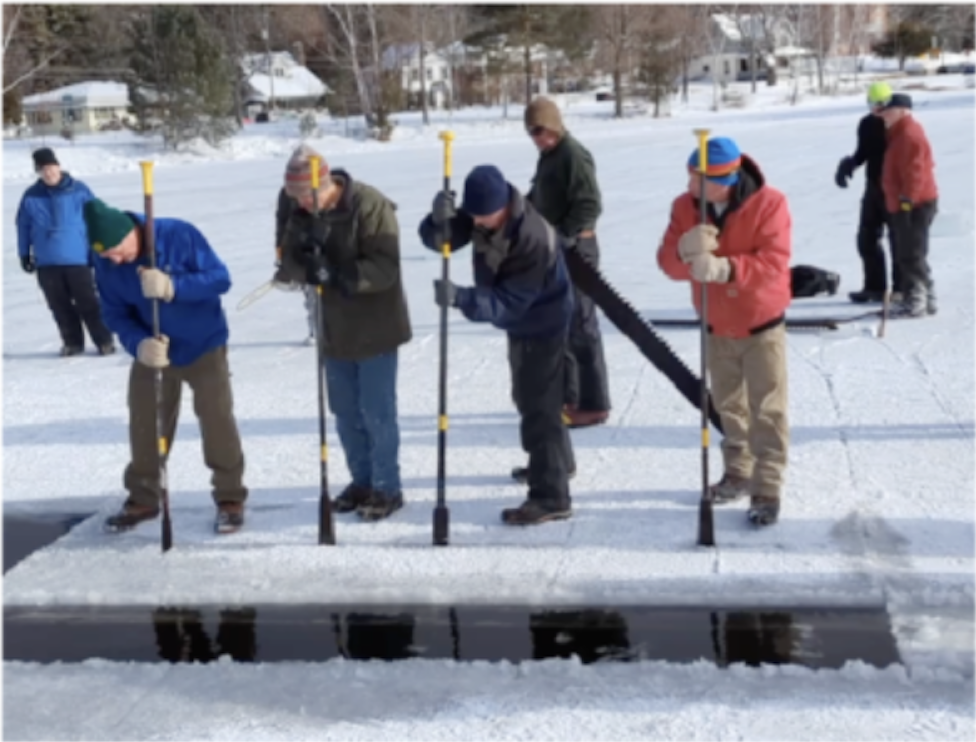
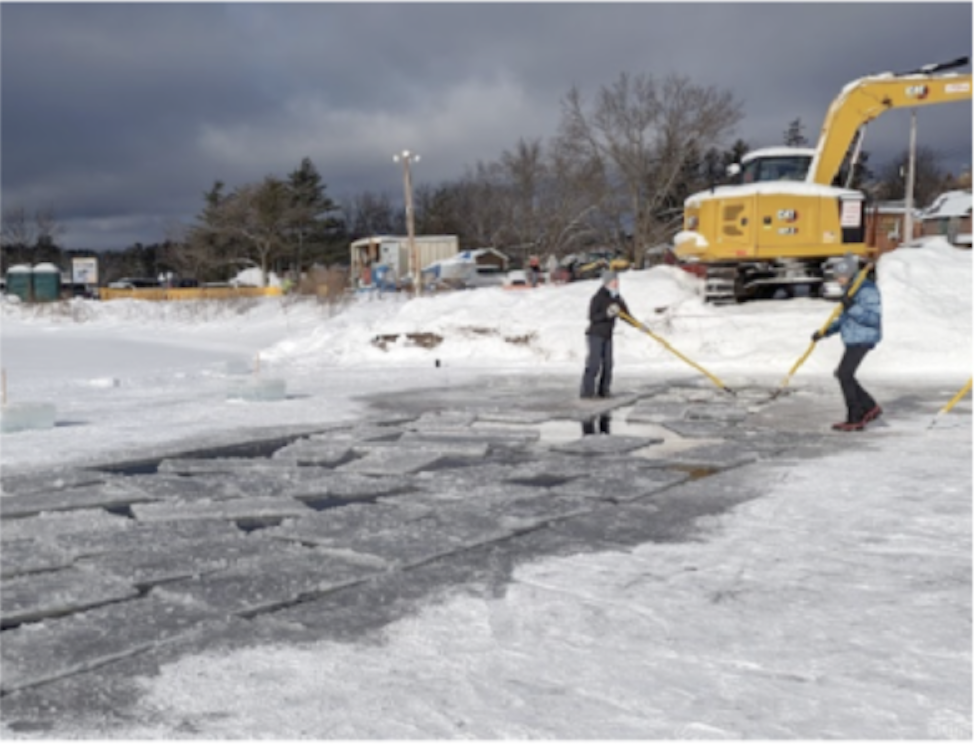
I had skated a few times on the frozen Raquette River near my home, but this was completely different. They were “scoring” the ice five inches down into the twelve-inch-thick surface (to prep for cutting the blocks) and we were literally standing on the weakened grid. There was a big hole, known as “the channel” where we could see the open water! When the IPW cracked the ice with their long tools, a process called spudding, the surface under my feet shook like a mini earthquake. What was I doing? I’m a fiddle player. It was awesome!!! Calling the experience exhilarating is an understatement.
“Calling the experience of standing on the ice during the harvest exhilarating is an understatement!”
ICE HARVEST PROCESS
As we stood on the ice, Tom talked me through the harvesting process.
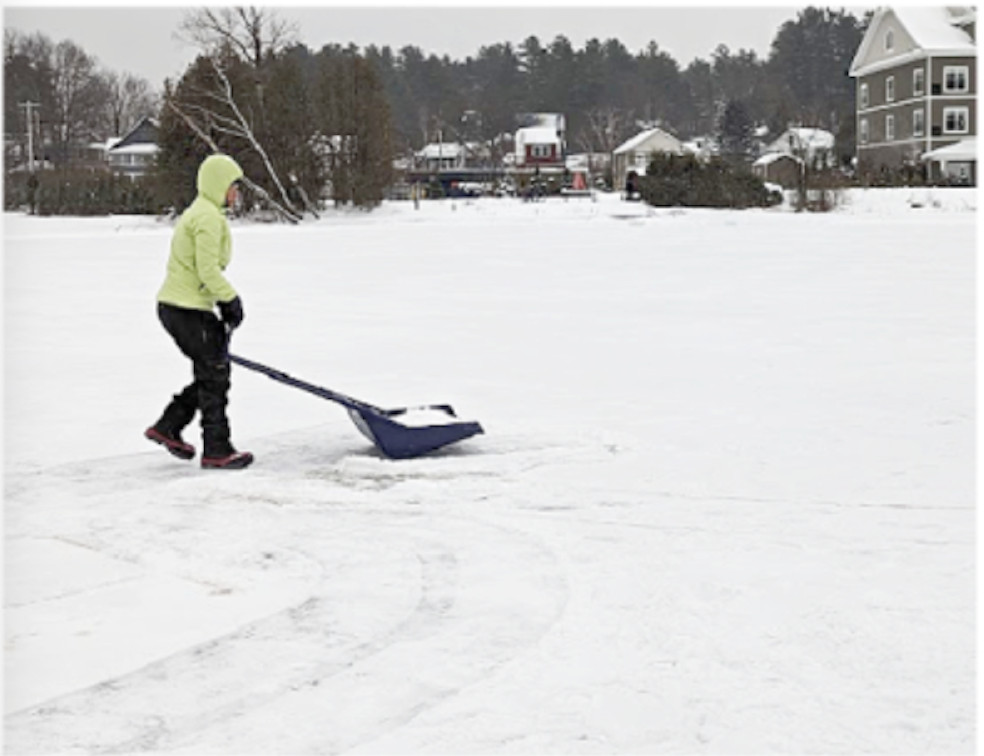
• Harvest when the ice reaches 12 inches thick. • Several people commented how the climate warming trends were making it harder for the lake to reach this thickness each year.
• Prep the ice by clearing the snow.
• Score the ice about 5 inches deep to prep for cutting the blocks.
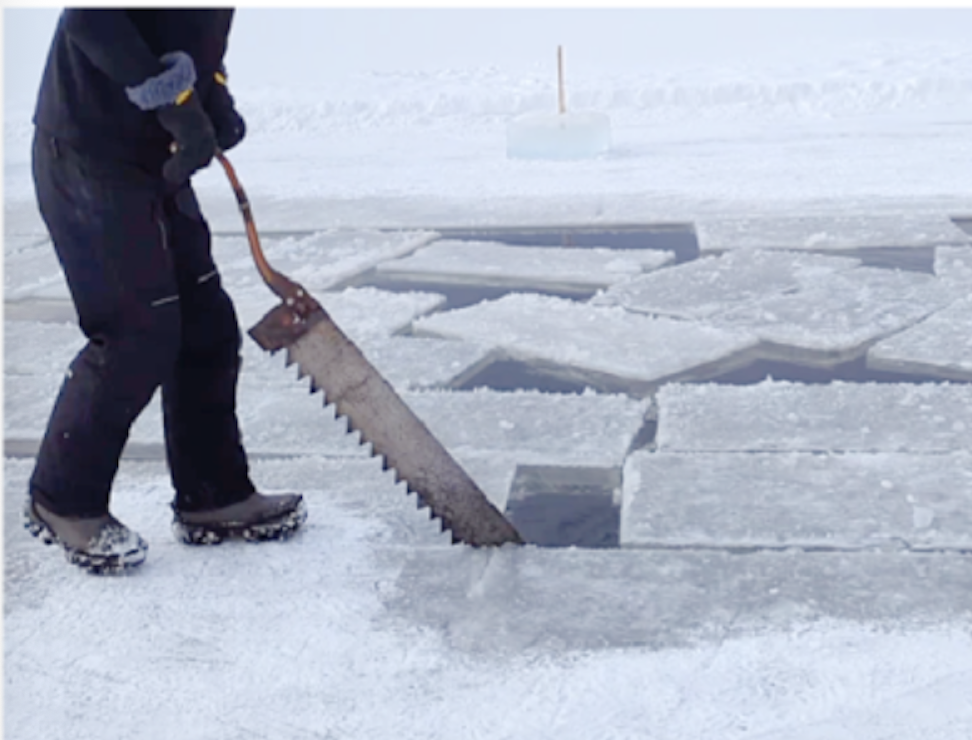
• Cut the ice with an ice saw or modern powered saw to free the blocks.
• In addition, people would “spud” the seams by using a spud (long metal tool) to crack along the lines and separate the blocks.
• Float the blocks down the channel to the edge of the lake where they were removed from the water.
COMMUNITY SPIRIT
I spent much of the morning filming and talking to the IPW before heading home to my fiddle studio to teach that afternoon. At the dinner table, I couldn’t stop talking about the experience. I even convinced my husband, Joel, to get up at 6:30 a.m. the next morning to drive down and see it firsthand before work. He described it as humbling to watch these volunteers (volunteers!?) carrying on this tradition. On the ride home, we talked about how, despite having modern and easy ways of making ice, this community deliberately preserves the practice to honor the past, celebrate their roots, teach their kids, and pass on knowledge.
The atmosphere on the ice was jubilant. One volunteer brought coffee for everyone, another delivered donuts, and friends chatted while working in the bitter cold. School kids on buses waved to the volunteers obviously excited to see the progress on the palace each day.
After listening to the archives on NCPR of the men describing the ice harvest as the hardest, most grueling work of their lives, I had imagined composing a very serious work tune. Now, I realized I also had to capture the joy, laughter, and sense of community that carried this work forward in the present.
“I also had to capture the joy, laughter, and sense of community that carried this work forward in the present.”
PRESS
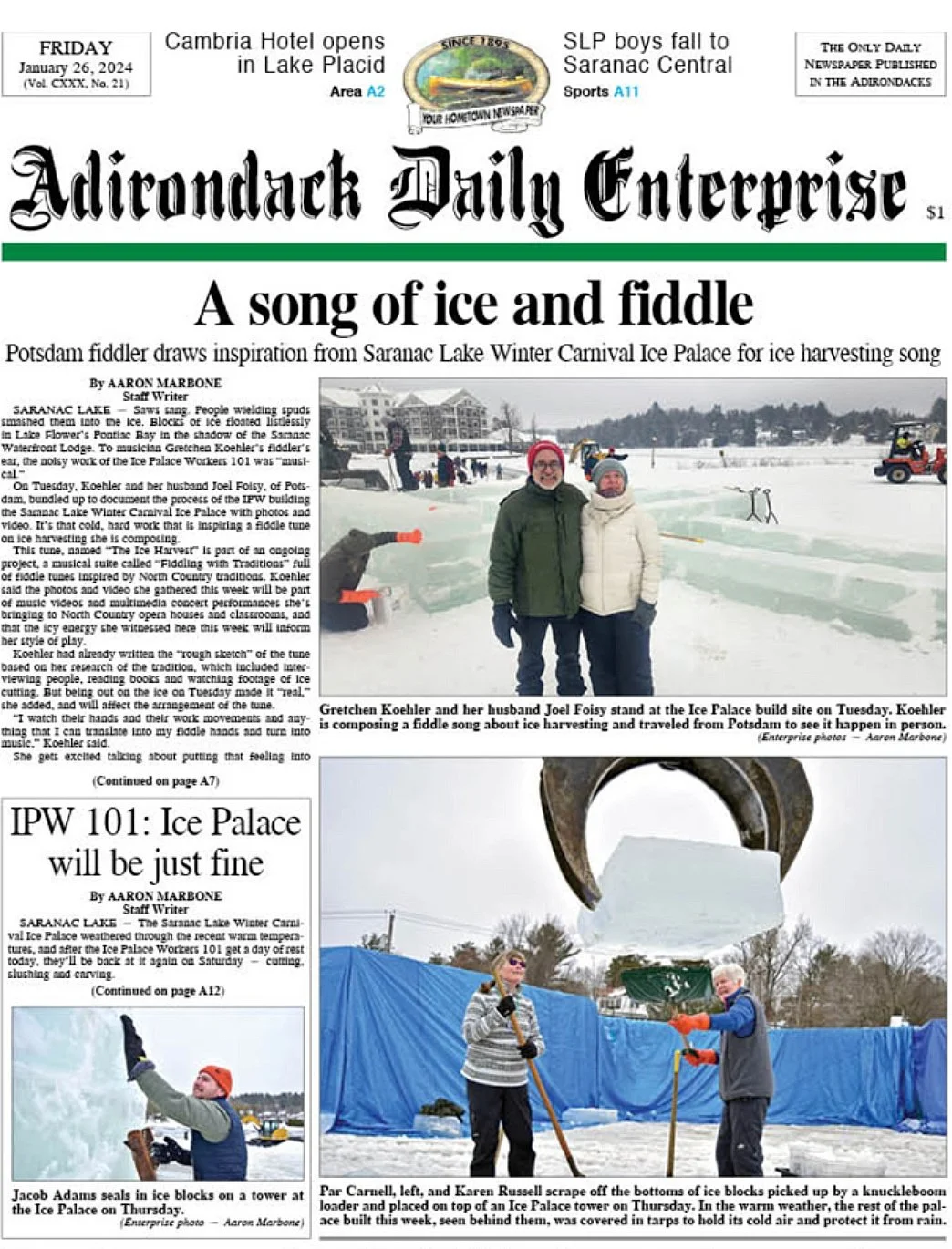
Several towns in our cold, northern corner of New York State continue this tradition, and the ice harvests are always a favorite for the local news. Apparently, when a fiddler comes along to write a tune about the process, it’s a fresh angle. My husband and I had a good chuckle when we found ourselves smack on the front page of the paper. So much for keeping this project under the radar!
COMPOSING
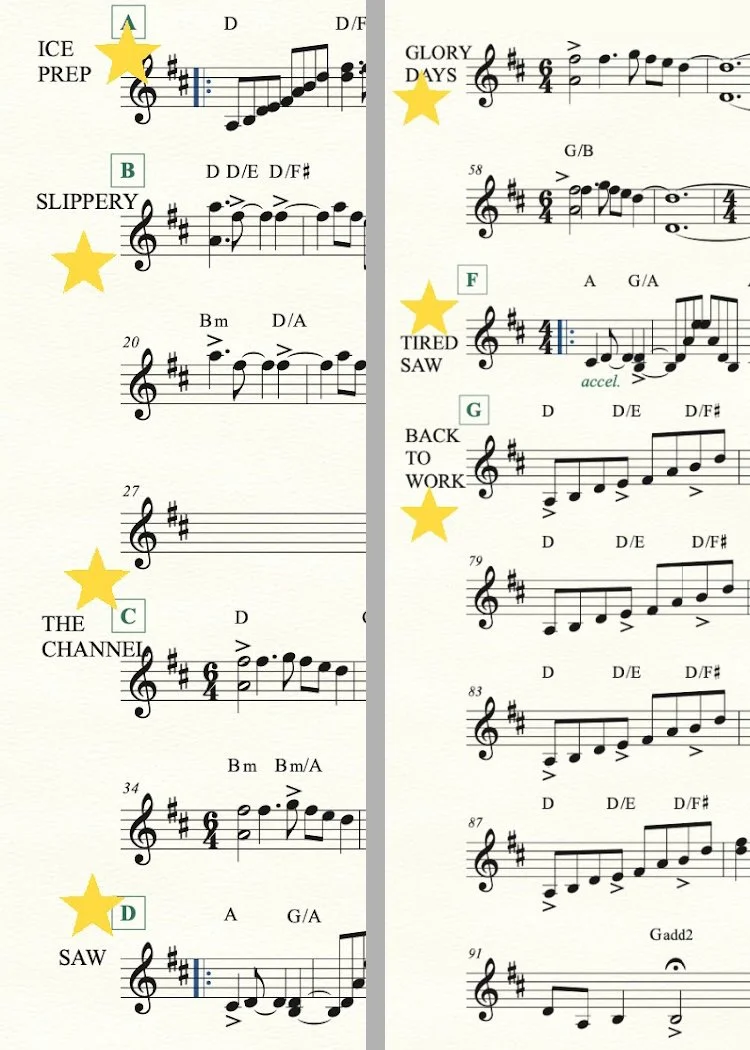
My usual process is to compose the tune first, then edit the film. I began by writing a traditional tune in AABB form, then modified it with extra beats -here and there- to evoke the feeling of taking the time to find your balance on a slippery surface. I added several extra sections to the main theme to capture what I witnessed on the ice like the sawing motion of the IPW arms and the heavy “thud” of the spudding blades in the ice. As I had done with other pieces in my Fiddling With Traditions suite, I labeled the sheet music to help convey the musical ideas to my partner, pianist Daniel Kelly.
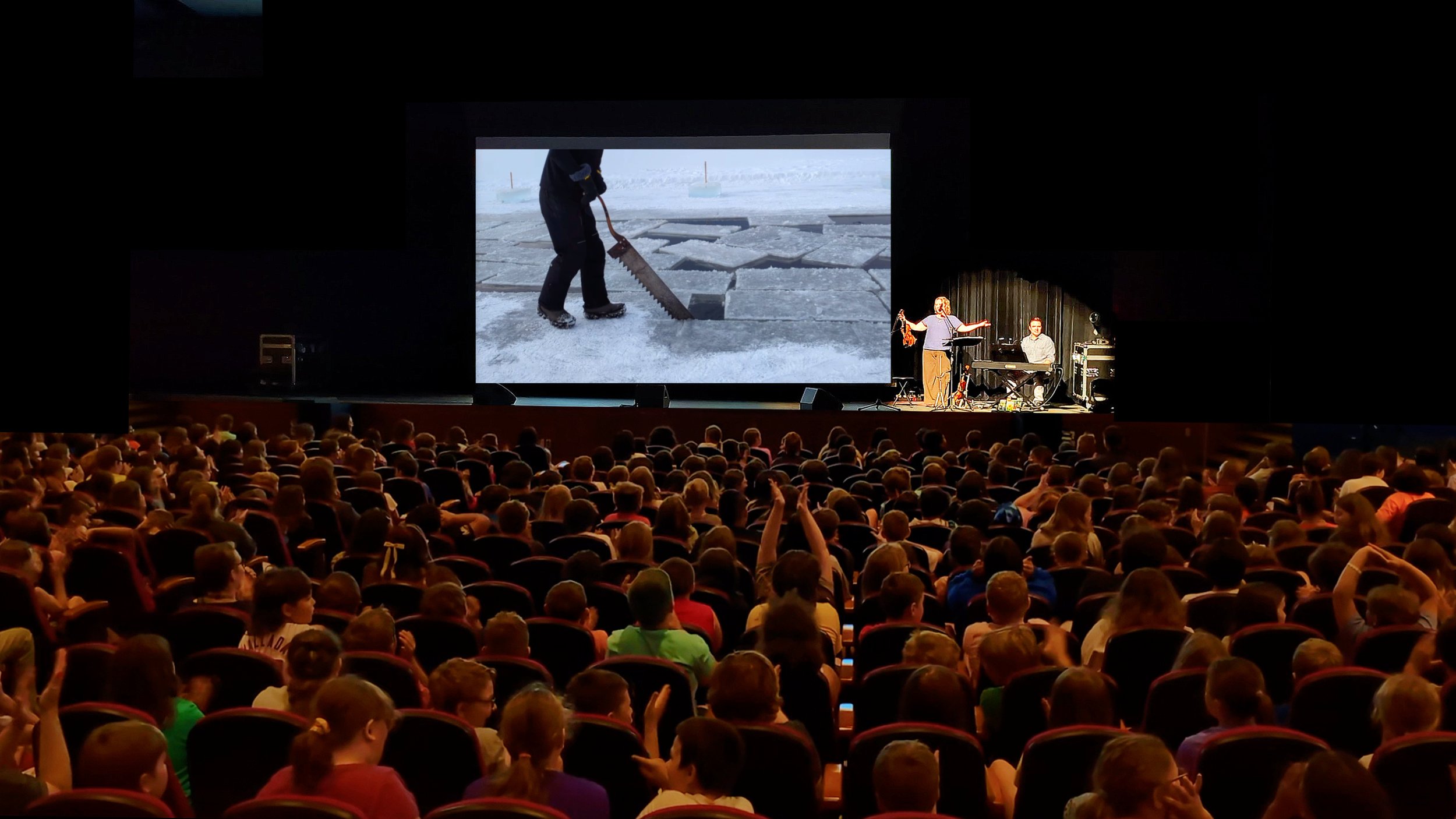
At school assemblies, students around New York State absolutely love the Ice Harvest Reel.
LISTENING GUIDE • ICE HARVEST REEL
• The tune opens with the start of a new day. Mid-tune, it slows and re-starts representing another day of work.
• Notice the slippery, sliding quality of the music with uneven time signatures throughout.
• Listen for my fiddle arm “sawing” the ice.
• Notice the full bodied melody with many supporting double stops to reflect the workers’ physical strength and perseverance during a long work day.
• Hear the pounding rhythms and accents to represent the workers “spudding” the ice seams.
• Find the joy of the Saranac Lake community woven into the tune.
• At the end, listen for the melting ice as the music slows and drips, a nod to changes to the climate.
ABOUT FIDDLING WITH TRADITIONS
Fiddling With Traditions is a fun, imaginative, mutimedia concert that features fiddler/tunesmith Gretchen Koehler & pianist Daniel Kelly sharing fiddle tunes that evoke everything from sweeping paint strokes, to intricate stitching, to the fiery forging of American folk traditions. From heart pumping musical arrangements to peaceful panoramas, their expressive soundscapes capture the spirit of rug braiding, blacksmithing, ice harvesting, quilting, silversmithing, paper making, knitting, baking, painting, maple sugaring, beekeeping and wood working. Audiences of all ages will enjoy this captivating musical adventure enhanced by a backdrop of gorgeous film and photography.